Before and After The “I Do”
Practical Premarital Counseling and Personalized Wedding Ceremonies for the Small-Church Pastor
Introduction: More Than a Wedding
One of the privileges of being a pastor is being invited to participate in some of the most important moments in people’s lives. We stand beside families when they welcome a new baby, celebrate significant accomplishments, and say goodbye to someone they love. And occasionally, we get to stand beside two people who have decided to spend the rest of their lives together.
I love weddings.
I love watching the groom’s face when he first sees his bride. I love the excitement of the families. I even enjoy those unexpected moments when something doesn’t go exactly as planned. Sometimes those become the most memorable parts of the day.
But after years of pastoral ministry, I’ve come to realize that one of the most important things I do in preparing for a wedding happens long before the bride walks down the aisle.
It happens when I sit down with the couple and begin asking questions.
How did you meet? What first attracted you to each other? What was your best date? What was your worst fight?
Those questions usually lead to laughter, a few interesting stories, and sometimes some surprisingly honest conversations.
And that’s exactly what I’m hoping for.
I want to get to know the couple. I want to hear their dreams, understand their expectations, and discover some of the experiences that have shaped their lives.
But more importantly, I want to help them prepare for something much more significant than their wedding day.
I want to help them prepare for their marriage.
Keeping It Simple
Over the years, I’ve developed a fairly simple approach to premarital counseling.
Ideally, I would like to meet with a couple four times. In reality, we usually meet three times, combining some of the material depending on how our conversations are going.
And occasionally, I encounter a couple who aren’t particularly excited about premarital counseling. They want to get married, not spend several evenings answering a pastor’s questions!
For those couples, I’ve developed a shorter version.
Is it ideal? Probably not. But I’ve always believed that a little meaningful conversation is better than no conversation at all.
My counseling revolves around four subjects:
- Dreams & Destiny: Understanding where we’ve come from and where we hope to go.
- What’s Love Got to Do With It? Understanding love and learning to meet each other’s needs.
- Habits That Kill: Recognizing behaviors that can slowly destroy a marriage.
- Fighting the Good Fight: Learning how to disagree, forgive, and move forward together.
I don’t pretend these conversations will answer every question a couple will face in marriage. They won’t.
But I hope they’ll begin some conversations that continue long after the wedding.
And I have one particular destination in mind as we work through these sessions.
Saving the Best for Last
There’s one question I always want to ask before our counseling concludes.
“Are you going to forgive each other like God forgives, or like the world forgives?”
The world often says, “I forgive you,” but doesn’t hesitate to bring the offense up again during the next disagreement.
God’s forgiveness is different.
The Bible tells us that God removes our sins as far as the east is from the west (Psalm 103:12). He also promises to remember our sins no more (Hebrews 8:12).
Think about that. When God forgives us, He doesn’t keep bringing those forgiven sins back up to use against us.
Wouldn’t it be wonderful if husbands and wives learned to forgive that way?
But that leads to an even more important question.
How can we forgive like God forgives?
I believe it begins by personally experiencing His forgiveness.
When we realize how much God has forgiven us, we become better equipped to extend that same grace to someone else.
And that gives me a wonderful opportunity to talk about Jesus.
Many of the couples I counsel already know the Lord. Others do not. But regardless of where they are spiritually, I want them to understand the wonderful difference God’s forgiveness can make in their lives and their marriage.
I sometimes tell couples that Christians ought to be among the happiest people anyone meets. Not because everything in our lives goes perfectly, but because our sins have been forgiven and God isn’t waiting to bring them up again.
That’s good news for a marriage. And it’s even better news for eternity.
I don’t want to miss that opportunity.
Finding Their Song
There’s another reason I enjoy getting to know couples during premarital counseling.
I’m always looking for something that might help me make their wedding ceremony personal.
Over the years, I’ve developed a habit of using metaphors based on the couple’s interests and experiences.
One of my favorites came from a young man who played bass in our church praise band and a young lady who sang soprano.
As I thought about their love for music, it occurred to me that marriage is a lot like writing a beautiful love song.
I reminded them that they wouldn’t always be singing the same note. In fact, beautiful harmony often comes from singing different notes together. I encouraged them to appreciate their differences rather than allowing one person to drown out the other.
Then I reminded them that every love song has many verses. The first verse may be romantic and dreamy, but later verses sometimes introduce conflict and disappointment.
And I encouraged them not to stop singing the song.
Finally, I reminded them that God desires to be the One directing the melody of their marriage.
I enjoyed preparing that message, and apparently it made an impression because I’ve since adapted it for another couple who also loved singing together. Their musical experiences were a little different, but the principles were just as meaningful.
That’s one of the things I’ve learned about wedding messages. You don’t necessarily need a completely new illustration for every couple. But you do need to know the couple well enough to make the illustration meaningful to them.
I’ve used hiking, fishing, baseball, horses, and even cars to communicate biblical truths about marriage.
And my congregation has become accustomed to these personalized messages. I suspect some people attend weddings wondering what metaphor I’m going to come up with this time!
But there’s something even more important than finding a clever illustration.
It’s Their Ceremony, Not Mine
This is a principle I take seriously.
It’s their ceremony, not mine.
Just because I think a story is funny doesn’t mean the bride and groom want it shared in front of their family and friends.
And just because I think an illustration is meaningful doesn’t necessarily mean it will be meaningful to them.
That’s why I always share the ceremony with the couple beforehand.
Not just the metaphor. The entire ceremony.
I want them to know what I’m planning to say, and I want their approval.
Certainly, as a Christian pastor, there are biblical convictions that guide what I can and cannot do in a wedding ceremony. But within those convictions, I want the couple to have a ceremony that reflects who they are and what this day means to them.
My responsibility isn’t to impress the congregation with a clever sermon.
It’s to honor the couple, point them toward Christ, and help make their wedding ceremony a meaningful beginning to their marriage.
A wedding should reflect the couple standing before us, not simply the personality of the pastor standing beside them.
A Resource for Fellow Pastors
This little book isn’t intended to replace professional marriage counseling or a comprehensive premarital preparation program.
It’s simply an opportunity to share some things I’ve learned through the years.
In the first part, I’ll walk you through the conversations I typically have with couples before their wedding. I’ll include the questions I ask, the illustrations I use, and some of the lessons I’ve learned.
I’ll also share the shorter version of my premarital counseling for those occasions when time is limited or a couple is reluctant to participate in several sessions.
In the second part, I’ll share several wedding messages I’ve used and explain how I developed them around the couples’ interests.
My hope is that these ideas will help you prepare couples for marriage, create more personal wedding ceremonies, and perhaps open a door for you to share the wonderful grace of Jesus Christ.
Feel free to adapt the material to fit your own personality and ministry.
After all, the wedding ceremony may last only twenty or thirty minutes.
But the marriage we’re helping them prepare for will hopefully last a lifetime.
And if somewhere along the way we can help a couple discover the forgiveness, grace, and love of Jesus Christ, we will have accomplished something far more important than conducting a beautiful wedding.

Before and After “I Do”
Chapter One: Dreams & Destiny
Getting to Know the Couple and Building a Foundation for Marriage
One of my favorite parts of premarital counseling is hearing how couples met.
Some stories are romantic. Some are funny. And occasionally, I find myself wondering how in the world these two people ever ended up together!
But every couple has a story. And before I begin telling them what I think they need to know about marriage, I want to hear theirs.
That’s why I begin my premarital counseling with a session I call “Dreams & Destiny.”
My purpose is fairly simple. I want to discover where they’ve been, where they hope to go, and what experiences have shaped their expectations of marriage.
And along the way, I hope to help them learn a few things about each other that perhaps they’ve never considered.
Before We Begin
Before we get into the questions, there are usually two things I want the couple to understand.
First, I tell them, “The purpose of premarital counseling is not to talk you out of getting married. It’s probably too late for that anyway!”
Usually, that gets a laugh.
But then I explain that the real purpose of our time together is to help them have a better marriage.
I want to share some things I’ve learned over the years that might help them avoid unnecessary problems and build a stronger relationship.
We’re not simply preparing for a wedding day. We’re preparing for all the days that follow.
Second, I want them to understand the significance of asking a minister to officiate their wedding.
I tell them, “When you ask a minister to perform your wedding ceremony, you’re saying something important. You’re saying that you want God to be part of your wedding.”
But there’s more to it than that.
“You’re also saying that the promises you’re about to make aren’t just promises to each other. They’re promises you’re making before God.”
I want them to understand that marriage is more than a legal agreement or a romantic celebration.
It is a sacred commitment.
When they stand before their family and friends and promise to love, honor, and remain faithful to each other, they’re making those promises in the presence of God.
And I believe that makes those promises especially meaningful.
I don’t spend a great deal of time lecturing them about this. I simply want to establish from the beginning that God has a place in the marriage we’re preparing to celebrate.
Then we’re ready to begin our conversation.
The Beginning: Everybody Has a Story
I usually begin with four questions:
- How did you meet?
- What first attracted you to your fiancé or fiancée?
- What was the best date you’ve ever had together?
- What was your worst fight?
The first three questions usually produce smiles and laughter. The fourth sometimes changes the atmosphere in the room!
But that’s okay.
I want the couple to understand from the beginning that our conversations aren’t going to be limited to romantic feelings and wedding plans.
We’re preparing for a marriage, and that means talking about the wonderful things as well as the difficult ones.
I also find that these opening questions help the couple relax. I’m not sitting across from them with a clipboard trying to determine whether they’re qualified to get married. I’m simply getting to know them.
And while they’re talking, I’m listening.
Sometimes I discover a hobby they enjoy together. Sometimes I hear about a meaningful experience they’ve shared. Sometimes a story gives me an idea for a wedding illustration.
I’m always looking for those possibilities, although the couple may not realize it at the time.
But there’s another reason I ask about their favorite dates.
I want them to remember what brought them together.
Think about how much effort people put into dating before they get married.
They plan special evenings. They look for opportunities to spend time together. They try new experiences. They do things they know the other person will enjoy.
And then they get married.
Before long, work schedules, bills, children, and the responsibilities of everyday life begin filling the calendar.
The very things that brought them together can slowly disappear.
And when couples stop doing the things that strengthened their attraction, they shouldn’t be surprised when that attraction begins to fade.
That’s why I ask about their best date.
I want them to remember what made it special. Was it the place they went? Was it something unexpected that happened? Or was it simply the opportunity to enjoy being together?
Whatever it was, I encourage them not to forget it.
And more importantly, I encourage them to keep making new memories.
You don’t have to spend a fortune to have a wonderful date. Sometimes a walk together or an inexpensive meal can be more meaningful than an elaborate evening.
The important thing is continuing to pursue each other.
Attraction brought you together. Don’t stop doing the things that helped it grow.
We’ll come back to that thought before this session is over.
The Dream: What Does Your Future Look Like?
After we’ve talked about their beginning, I ask them to imagine their future together.
Here are four questions I normally use:
- Where would you like to live?
- What would you like to do with your life?
- How many children would you like to have?
- What is one thing you would like to do before you die?
I enjoy this part of the conversation because people have such different dreams.
One person may want to travel the world while the other would be perfectly content living in the same community for the rest of their life.
One may dream of having several children while the other imagines a much smaller family.
And sometimes, for the first time, they discover that their dreams aren’t exactly the same.
That doesn’t necessarily mean there’s a problem.
It means there’s something worth discussing.
I want couples to understand that marriage doesn’t require them to surrender every individual dream. But it does require them to consider how their dreams will affect the person they’re marrying.
A good marriage isn’t simply two people pursuing separate futures while living under the same roof.
It’s two people learning how to build a future together.
But there’s something else I want them to understand.
Their dreams are going to change.
The dreams they have at twenty-five may not be the dreams they have at forty-five. Life brings new opportunities, new responsibilities, and sometimes unexpected disappointments.
That’s why I encourage couples to keep talking about their dreams throughout their marriage.
And this is usually where I offer them a compliment.
I tell them, “I believe you genuinely want to make the person you’re marrying happy. I believe you want to help them experience the things they’ve always dreamed about.”
But then I remind them of something important.
“You can’t help fulfill a dream your spouse hasn’t told you about.”
And sometimes I have a little fun with this.
Let’s suppose one person says they’ve always dreamed of climbing Mount Everest.
I ask the other person to imagine coming home one afternoon and finding an envelope sitting on the kitchen table.
Inside are tickets for a trip to Mount Everest!
Your spouse remembered that dream and wanted to make it come true.
Now, whether you decide to go along on that adventure or let your spouse go alone is entirely up to you.
Just make sure it isn’t a one-way ticket!
Usually, we get a pretty good laugh out of that.
But the point is serious.
One of the joys of marriage is helping the person you love experience the things they’ve always dreamed about.
And that can’t happen unless you keep talking.
Intimacy is more than physical affection. It is knowing the other person’s heart, understanding their hopes, recognizing their fears, and continuing to discover who they are becoming.
The person you’re marrying today will continue to grow and change throughout your marriage.
Make sure you keep getting to know them.
Intimacy grows when we keep sharing our hearts, our hopes, and our dreams.
And that’s another thought we’ll return to before our session concludes.
The Destiny: Understanding Where You’ve Been
This is where our conversation becomes a little more personal.
I ask four additional questions:
- What did you like best about your parents’ relationship?
- What would you like to change about your parents’ relationship?
- What are three significant events that have happened in your life?
- What is the one thing your future spouse must do?
I believe our past has a tremendous influence on our expectations of marriage.
Some people grew up watching parents who demonstrated affection, respect, and forgiveness.
Others witnessed constant arguments, emotional distance, broken promises, or even divorce.
Most of us experienced some combination of good and bad examples.
And whether we realize it or not, those experiences can influence what we expect from our spouse.
That’s why I want couples to talk about them.
I particularly like asking what they would change about their parents’ relationship.
I’m not encouraging them to criticize their parents. I’m encouraging them to recognize that they have an opportunity to build their own marriage.
They can carry forward the things they admired and make intentional choices about the things they hope to do differently.
The question about three significant life events can also lead to some meaningful conversations.
Sometimes those events are wonderful memories. Other times, they’re painful experiences that have shaped how someone views relationships, trust, or commitment.
I don’t try to force anyone to share something they’re uncomfortable discussing. But I want them to know that their stories matter.
And finally, I ask what one thing their future spouse must do.
That question helps reveal expectations that might otherwise remain unspoken.
I’ve discovered that some of the most difficult problems in marriage begin with expectations that were never discussed.
But there’s one particular lesson I want couples to understand about commitment.
Remove divorce language from your marriage.
I’m not suggesting that every disagreement will be easy to resolve. And I’m certainly not suggesting that every day of marriage will be wonderful.
There will be difficult days.
There will be disagreements.
There may even be seasons when the relationship requires more effort than either person ever imagined.
But here’s what I want couples to understand.
It’s difficult to give yourself completely to someone when you’re constantly wondering whether they’re going to leave.
Trust grows when we know that the other person is committed to working through life’s difficulties with us.
If every disagreement ends with someone threatening to leave or talking about divorce, the relationship begins to lose its sense of security.
I want couples to develop a commitment that says, “We’re going to work through this together.”
That doesn’t mean ignoring serious problems, tolerating abuse, or refusing to seek help when a marriage becomes unsafe. Those situations require appropriate protection and intervention.
But in an ordinary, healthy marriage, commitment means refusing to use the possibility of divorce as a weapon during disagreements.
The goal isn’t simply to remain married.
It’s to build a relationship where both people feel secure enough to love, trust, and grow together.
Commitment provides the security that allows love to deepen.
And now we’re ready to bring everything together.
The Three-Legged Stool: Bringing It All Together
As we conclude our first session, I introduce an illustration that I hope the couple will remember for the rest of their marriage.
I tell them that marriage is like a three-legged stool.
The three legs are attraction, commitment, and intimacy.
Now, you can sit on a stool with one leg considerably shorter than the other two. It probably won’t collapse. But it certainly won’t be comfortable!
You’ll constantly find yourself leaning one way or another, trying to compensate for that shorter leg. The other two legs have to carry more of the weight.
And that’s exactly what can happen in marriage.
Some couples remain married for years even though their attraction has faded, their commitment has weakened, or their intimacy has suffered.
They’re still married, but they’re constantly having to compensate for something that’s missing.
And marriage doesn’t have to be that way.
That’s why I want you to remember the three conversations we’ve had today.
Attraction: Keep dating each other.
Remember those wonderful dates you told me about? Don’t stop having them just because you’re married. Keep pursuing each other and making new memories.
Commitment: Remove divorce threats from your disagreements.
Your spouse needs the security of knowing you aren’t going to threaten to leave every time things get difficult. Trust grows when both people know they’re committed to working through problems together.
Intimacy: Keep sharing your dreams.
Your dreams will change throughout your marriage. Keep talking about them. You can’t help fulfill a dream your spouse hasn’t shared with you.
Then I ask each person two questions:
Which leg of your relationship is the strongest?
Which leg is the weakest?
Sometimes they agree. Sometimes they don’t. And that’s usually the beginning of another interesting conversation!
Finally, I tell them:
“I hope someday, years from now, the two of you will go out to eat together. Maybe you’ll sit down at a restaurant—not a bar—and discover that your stool isn’t level.
“You’ll find yourself rocking back and forth because one leg is shorter than the others.
“And I hope you’ll remember this conversation.
“Maybe you’ll look at each other and smile, and one of you will ask, ‘Which leg of our marriage is the strongest right now? And which one needs a little work?’”
Because the strongest leg today may not be the strongest leg ten years from now.
And the weakest leg doesn’t have to remain weak.
Keep dating. Keep your commitment strong. Keep sharing your dreams.
Those three habits will go a long way toward making your marriage not only last, but become something you both genuinely enjoy.
A Final Thought for the Pastor
One of the things I enjoy about this session is that it doesn’t feel like a lecture.
We’re talking about their lives.
We’re remembering special dates, discussing family experiences, and dreaming about the future.
And while all of that is happening, I’m getting to know the couple.
I’m also listening for possible wedding metaphors.
A shared hobby, an interesting story, or even an unusual dream may become the foundation for a personalized wedding message.
But the most important thing isn’t discovering a clever illustration.
It’s helping the couple begin some conversations that will hopefully continue throughout their marriage.
Don’t be in such a hurry to get through your outline that you miss an opportunity to learn something important.
The outline is a guide, not a script.
And remember that you aren’t simply preparing two people for a wedding ceremony.
You’re helping them begin a marriage.
That’s worth taking some time to do.
Session One: Questions at a Glance
The Beginning — Attraction
- How did you meet?
- What first attracted you to each other?
- What was your best date?
- What was your worst fight?
Key lesson: Keep dating each other.
The Dream — Intimacy
- Where would you like to live?
- What would you like to do?
- How many children would you like to have?
- What is one thing you would like to do before you die?
Key lesson: Keep sharing your dreams because dreams change.
The Destiny — Commitment
- What did you like best about your parents’ relationship?
- What would you change about your parents’ relationship?
- What are three significant events in your life?
- What is the one thing your future spouse must do?
Key lesson: Build a commitment that creates security and trust.
The Three-Legged Stool
- Attraction: Keep dating.
- Commitment: Remove divorce threats from ordinary disagreements.
- Intimacy: Keep talking about your dreams.
Which leg is strongest? Which leg needs the most attention?
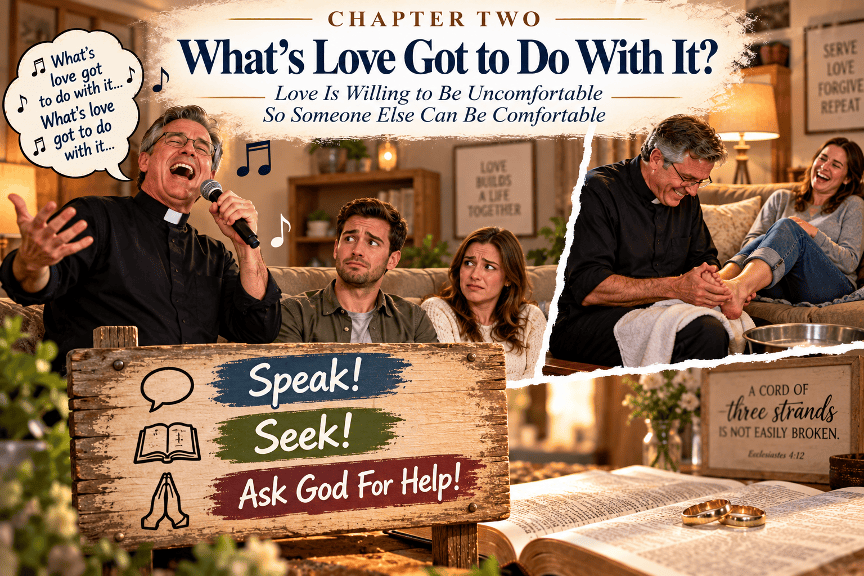
Chapter Two: What’s Love Got to Do With It?
Learning to Love the Person You’re Marrying
I usually begin our second premarital counseling session with a little music.
Unfortunately for the couple, I’m the one doing the singing.
I launch into my best—or perhaps my worst—imitation of Tina Turner singing “What’s Love Got to Do with It?”
Needless to say, my performance usually produces a reaction.
Sometimes they laugh. Sometimes they look like they’re about to cry.
Either way, I’ve got their attention!
Then I ask them a question.
“Who is a couple you think really loves each other, and why?”
I’m not necessarily asking them to identify a couple who has a perfect marriage. I’m asking them to think about two people whose love is evident in the way they treat each other.
I want them to put a face on love.
A Love That Still Sparkles
When I ask that question, I often think about Joe and Melveline Moore.
Joe and Melveline are no longer with us, but they left me with a wonderful picture of what love can look like after many years of marriage.
Joe lived into his nineties, and he loved introducing Melveline to people.
He would ask something like, “Have you met my young wife?”
Melveline was only about six years younger than Joe.
And when he said it, she would give him that look.
You know the look.
The one that says, “I’ve heard this about a thousand times!”
But what I remember most wasn’t the joke.
It was the sparkle in their eyes.
Even after all those years, you could tell they still enjoyed each other. They were still interested in each other. They still had something special.
I don’t know everything about their marriage. I’m sure they experienced difficult days just like everyone else.
But I do know what I saw.
I saw two people who still seemed delighted to be together.
And that’s the kind of love I want couples to think about as they prepare for marriage.
Not simply the excitement of falling in love.
But the kind of love that can still bring a sparkle to someone’s eyes after decades together.
The Gold Standard of Love
After we’ve talked about couples who demonstrate love, I tell them we’re going to look at the gold standard of love.
Then I read 1 Corinthians 13:4–8 aloud to them.
Paul describes love as patient and kind. Love doesn’t envy or boast. It isn’t proud, rude, self-seeking, or easily angered. It doesn’t keep a record of wrongs.
Love rejoices with the truth. It protects, trusts, hopes, and perseveres.
And love never fails.
I want the couple to understand that this is more than a beautiful passage to read at a wedding.
This is how God loves us, and this is how God wants us to love each other.
Then I usually make a statement that I don’t spend a great deal of time explaining just yet.
“To love someone like that, we first need to experience being loved like that.”
I let that thought settle for a moment.
There will be other opportunities in our counseling to talk more about our relationship with God.
For now, I want them to recognize that biblical love sets a very high standard.
And since remembering everything in 1 Corinthians 13 can be a challenge, I give them a much shorter definition.
My Definition of Love
Here’s the definition I want them to remember:
Love means I am willing to be uncomfortable so someone else can be comfortable.
That’s it.
It’s not particularly romantic.
It probably wouldn’t make a very good Valentine’s Day card.
But I believe it gets to the heart of what love requires.
Love means there will be times when I choose to do something I don’t particularly enjoy because it makes life better for someone I care about.
It means considering another person’s needs, desires, and happiness instead of always insisting on my own.
And I tell the couple that we’re going to come back to this definition several times during our conversation.
Because it’s one thing to say you love someone.
It’s another thing to be willing to make yourself uncomfortable for them.
The Five Love Languages: Unfortunately, Mine Isn’t Foot Rubbing
One of the tools I use in premarital counseling comes from Gary Chapman’s The 5 Love Languages.
Chapman identifies five common ways people express and receive love:
- Words of affirmation
- Quality time
- Receiving gifts
- Acts of service
- Physical touch
I explain that we often express love in the way we most naturally understand it.
The problem is that our spouse may experience love differently.
And this is where I usually tell the couple a little about my marriage.
My love language is acts of service.
I can wash the dishes, clean up the kitchen, or do something helpful around the house and feel like I’ve made a tremendous contribution to our marriage.
And quite frankly, I don’t understand why Kristi isn’t overflowing with love and appreciation when she sees those clean dishes!
Unfortunately for me, Kristi’s love language is physical touch.
And one of the things that makes her heart overflow is having me rub her feet.
Now, I need to explain something.
I hate feet.
I think they’re disgusting.
And the thought of rubbing somebody’s feet isn’t exactly my idea of a wonderful evening.
But remember my definition of love?
Love means I’m willing to be uncomfortable so someone else can be comfortable.
So I guess that means I need to rub those stinky feet!
Usually, the couple gets a pretty good laugh out of that.
But I hope they also understand the point.
If I only express love in the ways that are comfortable for me, I may not be loving Kristi in the ways that mean the most to her.
And the same thing is true for the couple sitting across from me.
I encourage them to talk about which expressions of love mean the most to them.
Not everyone fits perfectly into one category, and the love languages aren’t a scientific formula for marriage.
But they provide a helpful opportunity to discover something important:
What makes me feel loved may not be what makes my spouse feel loved.
And sometimes love requires us to step outside our own preferences.
Even when feet are involved.
His Needs, Her Needs: What Matters Most to You?
Another resource I’ve found helpful is Willard Harley’s His Needs, Her Needs.
I use a simple exercise based on the idea that people have different relationship needs.
I give each person the same list of ten items and ask them to rank the items from one to ten.
One represents the most important need.
Ten represents the least important of the ten.
Here are the items:
- Conversation
- Sex and physical contact
- Respect
- Compliments
- Financial security
- Commitment
- Recreational fun
- A clean house and yard
- Honesty
- Looking good
I give them time to think about their answers and write down their rankings.
Then we compare the lists.
This is usually one of the most interesting parts of our conversation.
Often, respect, commitment, and honesty are near the top.
And I understand why.
Those are important qualities in a relationship, especially when a couple is preparing to begin married life.
But then I tell them something that sometimes surprises them.
After thirty-four years of marriage, commitment isn’t particularly high on my list of needs.
Now, don’t misunderstand me.
Commitment is still extremely important.
But Kristi and I have been married long enough that we’re not spending our days wondering whether the other person is committed to the marriage.
That security has become part of the foundation of our relationship.
At this stage of life, something like financial security or recreational fun may seem more pressing than a need we’ve already spent decades establishing.
And that’s one of the lessons I want couples to understand.
Your needs will change as your marriage changes.
What matters most to you as newlyweds may not be what matters most when you’re raising children.
And what matters most while raising children may change again when those children leave home.
Life changes.
Our circumstances change.
And sometimes our needs change right along with them.
That’s why I want couples to do more than compare their lists today.
I want them to keep having these conversations throughout their marriage.
Speaking: Your Spouse Is Not a Mind Reader
By this point in the session, time can begin getting away from us.
The five love languages and the relationship needs exercise can produce some wonderful conversations.
But before we move on, I want to emphasize something.
Neither of you is a mind reader.
I don’t care how long you’ve known each other.
I don’t care how much you love each other.
And I don’t care how well you think you understand the person you’re marrying.
You cannot expect your spouse to automatically know what you need.
You have to tell them.
If quality time is important to you, say so.
If you’re feeling overwhelmed and need help around the house, talk about it.
If your priorities have changed because of a new job, children, or a difficult season of life, let your spouse know.
Don’t make your spouse guess.
And don’t assume that because you discussed something ten years ago, the answer is still the same today.
Keep talking about your love languages.
Keep talking about your needs.
Keep telling each other what makes you feel loved and appreciated.
Speaking is one of the simplest ways to strengthen a marriage.
But it requires both people to be willing to communicate honestly and listen carefully.
Seeking: Looking for Ways to Make Life Better
Then I return to my definition of love.
Love means I’m willing to be uncomfortable so someone else can be comfortable.
I want couples to develop the habit of seeking opportunities to put that definition into practice.
Don’t wait until your spouse asks you to do something.
Look for ways to make their life easier.
Maybe they’re exhausted after a difficult day at work.
Maybe they’re worried about something.
Maybe there’s a responsibility they’ve been carrying that you could help with.
Or maybe there’s something small you could do that would simply bring them joy.
Seek those opportunities.
And here’s something I’ve noticed.
When one person consistently looks for ways to make life better for their spouse, the other person will often begin doing the same.
Love has a way of encouraging love.
Now, I’m not suggesting that we do nice things for our spouse only because we expect something in return.
That would miss the point.
But when both people are genuinely looking for opportunities to serve one another, marriage becomes a much more enjoyable relationship.
Instead of two people constantly asking, “What am I getting out of this marriage?” you have two people asking, “What can I do to make life better for the person I love?”
And that can make a tremendous difference.
Spirituality: Asking God to Help Us Love
Finally, I want couples to understand that they don’t have to learn how to love each other entirely on their own.
They can ask God for help.
I sometimes turn to Paul’s teaching about marriage in Ephesians 5, where he speaks about love and respect.
I believe there are particular challenges that husbands and wives may face in learning how to love one another.
For a husband, one of the challenges can be continuing to pursue and love the woman he has already won.
Men often enjoy a challenge.
They pursue something, work hard to achieve it, and then begin looking for the next challenge.
But marriage doesn’t work that way.
Your wife isn’t someone you pursue until the wedding day and then take for granted.
She’s someone you need to keep loving, appreciating, and pursuing throughout your life.
That’s why I encourage men to regularly pray something like this:
“Lord, help me love my wife the way You want me to love her.”
But I also warn them.
That can be one of the most dangerous prayers you’ll ever pray!
Because God may answer that prayer by asking you to do something you really don’t want to do.
Like rubbing stinky feet!
And once again, we’re back to my definition of love.
Sometimes loving someone requires us to be uncomfortable so they can be comfortable.
I also encourage women to pray about showing respect to their husbands.
After you’ve lived with someone for a while, you know their faults.
You know their weaknesses.
You know the things they struggle with.
And sometimes it can be difficult to show respect when you’re painfully aware of someone’s shortcomings.
That’s why I encourage wives to ask God to help them guard their thoughts, tame their tongues, and continue treating their husbands with respect.
Of course, husbands need to show respect too, and wives need to demonstrate sacrificial love. Paul’s teaching about marriage calls both people to take seriously the way they treat each other.
In fact, Ephesians 5 begins this discussion by calling believers to submit to one another out of reverence for Christ.
Neither spouse is being given permission to dominate, belittle, or mistreat the other.
The goal is to build a marriage in which both people are looking for ways to honor and love one another.
And sometimes we’re going to need God’s help to do that.
I know I do.
A Final Thought for the Pastor
I enjoy this session because it usually includes a lot of laughter.
My Tina Turner imitation certainly doesn’t win any awards.
And the discussion about rubbing Kristi’s feet usually produces a few smiles.
But beneath the humor are some very important truths.
Love is more than a feeling.
Love requires understanding what matters to the other person.
Love requires communication.
Love requires looking for opportunities to serve.
And sometimes love requires us to do things we’d rather not do.
That’s why I keep returning to one simple definition:
Love means I’m willing to be uncomfortable so someone else can be comfortable.
I want the couple to remember that definition long after they’ve forgotten the rest of our conversation.
Because if both people enter marriage looking for ways to make life better for the other person, they’re already moving in the right direction.
And if they learn to ask God for help along the way, I believe they’ll discover that His grace can help them love each other in ways they could never accomplish on their own.
Session Two: Questions at a Glance
Opening Conversation
Who is a couple you think really loves each other, and why?
Allow both individuals to answer and explain what makes that couple’s relationship special.
The Gold Standard
The pastor reads 1 Corinthians 13:4–8 aloud.
Key thought: This is how God loves us and how He wants us to love one another. To love like that, we first need to experience being loved like that.
A Simple Definition
Love means I am willing to be uncomfortable so someone else can be comfortable.
The Five Love Languages
- Words of affirmation
- Quality time
- Receiving gifts
- Acts of service
- Physical touch
Ask each person which expressions of love mean the most to them.
Ten Relationship Needs
Have each person independently rank these from 1 (most important) to 10 (least important):
- Conversation
- Sex and physical contact
- Respect
- Compliments
- Financial security
- Commitment
- Recreational fun
- A clean house and yard
- Honesty
- Looking good
Compare their answers and discuss any surprises.
Three Habits of Love
Speaking: Tell your spouse what you need. Neither of you is a mind reader.
Seeking: Look for ways to make your spouse’s life better, even when it inconveniences you.
Spirituality: Ask God to help you love and respect each other.
Closing Thought
What is one thing you could do this week to make life more comfortable for the person you love?
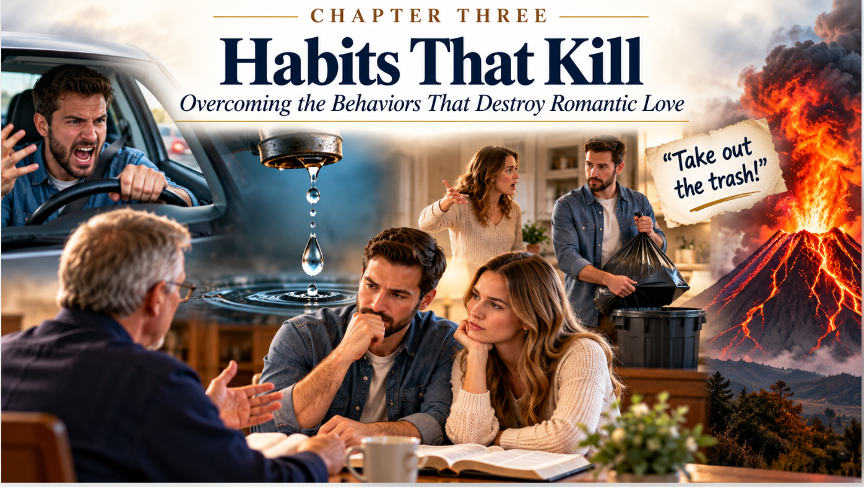
Chapter Three: Habits That Kill
Overcoming the Behaviors That Destroy Romantic Love
In our last session, we talked about love. We discussed love languages, relationship needs, and the importance of making life better for the person we’re marrying.
Now we’re going to talk about some habits that can destroy that love.
Much of this session is based on Willard F. Harley Jr.’s book, Love Busters: Overcoming Habits That Destroy Romantic Love.
I want to give credit where credit is due. Harley identifies six habits that can seriously damage a marriage, and I’ve found his work extremely helpful over the years.
In fact, I once purchased an entire case of his books.
But I discovered that the book could be a little frightening for couples preparing to get married!
Many of its chapters include examples of marriages damaged by infidelity. While those examples demonstrate how serious these destructive habits can become, I don’t necessarily want to fill an engaged couple’s mind with stories of marital disasters.
After all, my purpose in premarital counseling isn’t to frighten people about marriage.
It’s to help them build a better one.
So I use Harley’s six habits as the framework for our conversation, along with some of my own illustrations and practical advice.
Everybody Has Habits
I usually begin this session with a simple question.
“What is a habit?”
Eventually, we arrive at a definition something like this:
A habit is something you do so regularly that you hardly even think about it anymore.
Then I ask the couple:
“Do either of you have any habits?”
Sometimes they mention biting their fingernails, tapping their feet, or doing something a particular way every time.
And occasionally, the person sitting beside them knows about a habit they haven’t even thought to mention!
That can make for some interesting conversations.
I usually confess one of my own habits.
When I eat a meal, I tend to eat one food at a time.
I’ll finish one thing on my plate before moving on to the next.
I don’t know why I do that. It’s just the way I eat.
And that’s the thing about habits.
We often don’t even realize we’re doing them.
Then I explain that not all habits are bad.
In fact, some habits are extremely helpful.
There may even be habits that are necessary for us to succeed in our jobs.
For example, if you’re responsible for supervising employees, you may spend much of your day giving instructions, making decisions, and expecting people to follow through.
That may be an important part of your job.
But if you come home and treat your spouse like one of your employees, you’re going to have a problem!
Some habits that serve us well in one area of life can cause tremendous damage in another.
And the six habits we’re about to discuss can suck the love right out of a marriage.
The problem is that we may be practicing them without even realizing it.
Habit One: Selfish Demands
I begin with a question.
“What’s an example of a selfish demand you might make of your spouse?”
Sometimes the couple struggles to think of an answer.
Other times, they come up with something pretty harsh.
But then I surprise them with a simple observation.
Any demand can be selfish.
For example:
“Go take out the trash!”
That’s a selfish demand.
“Get in here and make me supper!”
That’s another selfish demand.
Now, the trash may genuinely need to be taken out. And somebody may need to prepare supper.
The problem isn’t necessarily what we’re asking someone to do.
The problem is how we’re treating the person we’re asking.
A demand assumes that I have the right to tell you what to do and that you have an obligation to obey me.
So I ask another question.
“What’s the opposite of a demand?”
Usually, someone comes up with the answer.
A request.
Then I ask them to imagine something.
What would your marriage look like if both of you made a commitment to make requests instead of demands?
Instead of saying, “Go take out the trash,” you might say, “Would you mind taking out the trash?”
Instead of demanding that your spouse prepare supper, you might ask, “Would you be willing to fix something for us to eat?”
Now, here’s where it gets interesting.
A request isn’t really a request if the other person isn’t allowed to say no.
If I politely ask my spouse to do something, but then get angry, pout, or kick the dog when the answer is no, I haven’t really changed very much!
I’ve simply disguised my demand with nicer words.
So I encourage couples to make genuine requests and to respond graciously when those requests are refused.
And here’s something I tell them.
“Neither one of you is a horrible person. You love each other. You want to make life better for each other.”
If you can make requests without punishing the other person for saying no, I suspect you’ll discover something.
The next time you ask your spouse to do something, they’ll probably be much more willing to help.
Why?
Because they know they have a choice.
They know you’re respecting them rather than trying to control them.
And that makes a tremendous difference in a marriage.
Then I remind them of something we discussed in our previous session.
Love means I’m willing to be uncomfortable so someone else can be comfortable.
Sometimes that means doing something for my spouse that I really don’t want to do.
And sometimes it means accepting the fact that my spouse doesn’t want to do something I’ve asked.
Either way, love requires me to think about someone besides myself.
By this point, I usually smile and ask the couple:
“Don’t you hate that definition of love by now?”
Hopefully, they laugh.
But I also hope they’re beginning to understand just how practical that definition can be.
Because selfish demands are one of the quickest ways to turn a loving relationship into a struggle for control.
And marriage should never become a contest to see who gets their way the most.
Habit Two: Dishonest Conversations
The second habit I discuss is dishonesty.
I begin by telling the couple something I believe is absolutely essential.
Marriage requires absolute honesty.
Then I ask a question.
“When is it difficult to tell the truth?”
Often, one of them will say, “When telling the truth might hurt someone’s feelings.”
So I ask them to give me an example.
And almost every time, someone says something like this:
“Does this dress make me look fat?”
Ouch!
Usually, we get a good laugh out of that.
What they don’t realize is that I’ve heard that same answer from just about every couple I’ve counseled!
But it raises an important question.
How do we tell the truth when the truth might not be what someone wants to hear?
Before answering that, I take the conversation in another direction.
I ask, “Are there times in your job when you feel pressured to stretch or distort the truth?”
Sometimes they can think of an example immediately. Other times, they struggle.
And that’s when I occasionally share a story about Rev. Harry Widener.
Harry once told me that he had a trash can at home named Spot.
Now, why would anyone name a trash can?
Well, occasionally, someone in his congregation would give him food that he didn’t particularly enjoy.
And rather than tell them he didn’t like it, he would take it home and put it in the trash can.
Then, when they asked him how he liked their food, he could smile and say, “That really hit the Spot!”
Usually, that produces another round of laughter.
And sometimes I can almost see the couple thinking back over conversations they’ve had with me, wondering whether I’ve ever told them something “hit the spot”!
But there’s a serious lesson behind the laughter.
Little white lies have a way of being discovered.
And when they are, they can damage something far more important than someone’s opinion of a meal or a dress.
They can damage trust.
Suppose your spouse asks what you think about an outfit.
You don’t have to be cruel.
You don’t have to say something hurtful.
But you can be kind and honest.
And here’s something I’ve discovered.
Your spouse may not agree with your opinion anyway!
They may decide they love the outfit regardless of what you think.
That’s fine.
At least they know you’ve told them the truth.
And there’s tremendous comfort in knowing that the person you’re married to will shoot straight with you.
Then I give them another example.
Suppose you tell your spouse, “I’m coming straight home after work.”
But on the way home, you decide to stop and spend some time talking with your buddies.
You don’t mention it when you finally get home.
No big deal, right?
Well, just wait.
A few days later, you’re somewhere with your spouse, and one of those buddies walks up and says, “Hey, I really enjoyed talking with you the other evening!”
And suddenly, you’ve got some explaining to do.
It’s amazing how often those little conversations come back around!
The Bible reminds us in Numbers 32:23 that our sin will find us out.
Now, I’m not suggesting that every unplanned stop on the way home is a terrible sin.
The problem is telling someone one thing and deliberately doing another while allowing them to believe something that isn’t true.
Why not simply be honest?
If your plans change, let your spouse know.
If you have a different opinion, express it kindly.
If you’ve made a mistake, admit it.
Because here’s what I want the couple to understand:
If your spouse can’t trust you to tell the truth about little things, they’re going to have a difficult time trusting you about big things.
And the opposite is also true.
When your spouse knows that you will be honest, even when honesty is uncomfortable, that creates a wonderful sense of security.
They don’t have to wonder whether you’re hiding something.
They don’t have to question every explanation.
They know they can trust your word.
And once again, we come back to our definition of love.
Love means I’m willing to be uncomfortable so someone else can be comfortable.
Sometimes telling the truth is uncomfortable.
Sometimes admitting we’ve made a mistake is uncomfortable.
And sometimes being honest means having a conversation we’d rather avoid.
But that temporary discomfort is worth it if it helps our spouse feel secure in our relationship.
So I encourage couples to make a commitment from the beginning of their marriage.
Tell each other the truth.
Be kind about it.
Be loving about it.
But be honest.
Because a marriage built on honesty is a marriage where trust has room to grow.
Habit Three: Angry Outbursts
The third habit that can destroy romantic love is angry outbursts.
I usually begin with a simple illustration.
People don’t like getting too close to a volcano.
Why?
Because you never know when it might explode!
And the same thing is true in marriage.
When someone has an explosive temper, the people around them learn to keep their distance.
Think back to our first counseling session when we talked about the three-legged stool: attraction, commitment, and intimacy.
An explosive temper can damage all three legs.
Attraction: It’s difficult to remain attracted to someone who regularly explodes in anger. Words spoken during those moments can be cruel and difficult to forget.
Commitment: An explosive temper undermines the security that makes a marriage feel safe. Instead of knowing you can work through problems together, you begin wondering when the next explosion will occur.
Intimacy: Remember how we talked about sharing our dreams? Who wants to share their deepest hopes with someone who might ridicule those dreams during an angry outburst?
And think about what we just discussed concerning honesty.
How can you be completely honest with someone when you’re afraid the truth might cause an explosion?
Eventually, people begin keeping things to themselves.
They stop sharing their feelings.
They stop talking about their dreams.
They may even begin hiding the truth because they’re afraid of the reaction they’ll receive.
And little by little, the relationship suffers.
Now, I don’t believe most people begin their day intending to have an angry outburst.
Sometimes anger is a learned behavior. Perhaps they grew up in a home where people regularly shouted at each other.
Sometimes temperament or other factors may contribute to the problem.
But here’s something I want couples to understand.
Whatever explains your anger doesn’t excuse it.
If you struggle with an explosive temper, please get help.
That may mean talking with a professional counselor. It may mean seeking spiritual guidance. And it certainly means being willing to acknowledge that something needs to change.
I encourage couples to cry out to God and ask Him to change their hearts.
Because love should never require someone to live in fear of the next explosion.
And if anger becomes threatening or abusive, the priority is safety, not simply learning to communicate better.
Remember our definition of love?
Love means I’m willing to be uncomfortable so someone else can be comfortable.
Sometimes that means admitting we have an anger problem and doing the difficult work necessary to change.
A marriage should be a place where both people feel safe enough to be honest, share their dreams, and express their feelings.
Not a place where they’re constantly watching for the next eruption.
Habit Four: Disrespectful Judgments
The fourth habit that can destroy romantic love is disrespectful judgments.
I usually begin by giving the couple a few examples.
“You’re the worst driver in the world!”
“You’re stupid!”
“You’re lazy!”
Then I tell them something I want them to remember.
Any sentence that begins with “You are…” is probably a disrespectful judgment.
Now, think about where some of these judgments begin.
In the car!
We make judgments about other drivers all the time.
That person is an idiot.
That person doesn’t know how to drive.
That person should never have been given a driver’s license!
And sometimes we make those judgments without knowing anything about the person behind the wheel.
Then we arrive at work, where the judgments continue.
In fact, some jobs require us to make quick judgments about people.
Is this person honest?
Is this person hardworking?
Is this person lazy?
Can I make a sale to this person?
We evaluate people constantly, often without giving it much thought.
And while making judgments may sometimes be necessary in our jobs, bringing that habit home can be deadly to a marriage.
When we begin telling our spouse what kind of person they are, especially in a negative way, we can crush their spirit.
And every disrespectful judgment takes a little more love out of the relationship.
The problem is that we rarely know the whole story.
Jesus warns us about judging others. One reason we need to be careful is that our understanding is often incomplete.
Just because someone needs more sleep than we do doesn’t necessarily mean they’re lazy.
And just because someone isn’t a particularly good cook doesn’t mean they’re the worst cook in the world!
We may have an opinion, but that doesn’t mean our opinion is the final word.
So I ask the couple another question.
“What’s the opposite of a disrespectful judgment?”
The answer I want them to consider is:
A humble observation.
Instead of saying, “You’re lazy,” we might say, “It appears that you need more sleep than I do.”
Instead of saying, “You’re a terrible cook,” we might say, “It seems like this meal could use a little more salt.”
Now, I’m not promising that commenting on the salt will always be well received!
But there’s an important difference between those statements.
A disrespectful judgment declares that I know exactly what’s wrong with you.
A humble observation leaves room for the possibility that I might be wrong.
And that’s important because sometimes I am wrong.
Maybe my spouse is exhausted because they’ve been carrying responsibilities I haven’t noticed.
Maybe the meal tastes exactly the way they intended it to taste.
Maybe the problem isn’t with the food at all. Maybe it’s with my taste buds!
Humility allows us to express concerns without acting as though we’re the final authority on everything.
And let’s face it.
Nobody enjoys living with a know-it-all.
This can be one of the hardest habits to break because judging people often comes so naturally.
We do it in traffic.
We do it at work.
We do it in conversations with friends.
But we need to be especially careful about doing it to the person we’ve promised to love.
So I encourage couples to pay attention to the way they speak to each other.
When you’re tempted to begin a sentence with “You are…” stop and think.
Are you making a judgment about your spouse’s character?
Or are you humbly describing something you’ve noticed?
And remember that even a humble observation needs to be expressed with kindness. Sometimes the most loving choice is to decide that a criticism doesn’t need to be made at all.
Once again, we’re back to our definition of love.
Love means I’m willing to be uncomfortable so someone else can be comfortable.
Sometimes that means swallowing my pride.
Sometimes it means admitting that I don’t know everything.
And sometimes it means keeping an unnecessary judgment to myself.
Harley uses the idea of a Love Bank to describe how our behavior affects the feelings we have for one another.
Disrespectful judgments make withdrawals.
But humility, kindness, and respect can make deposits.
So instead of constantly pointing out everything you think is wrong with your spouse, look for opportunities to build them up.
Be humble, and see how much love you can deposit into your spouse’s Love Bank.
Habit Five: Independent Behavior
“You are signing your life away!”
That’s something someone might jokingly say to a couple when it’s time to sign their marriage license.
But you know what?
In a sense, they’re right!
When a husband and wife sign that marriage certificate, they’re entering into a legally binding agreement.
But as Christians, we believe something even more significant is happening.
God intends for a husband and wife to become one flesh.
And that’s a whole lot more involved than simply sharing a checking account!
So I give the couple an illustration.
Before you get married, you’re running a pretty nice little restaurant.
It’s called Yourself.
You’re the owner.
You’re the manager.
And you’re the one who gets to make all the decisions.
You decide what’s going to be on the menu.
You decide when you’re going to open.
You decide when you’re going to close.
And if you decide you want to take the afternoon off, you can do that too!
After all, it’s your restaurant.
But then you get married.
And when you make those promises to God and to your spouse, something important happens.
You’re inviting someone else to become a co-owner of your restaurant.
Now, here’s the good news.
You also become a co-owner of their restaurant!
But things are going to be different.
You’re no longer making every decision independently.
If you want to change the menu, it’s probably a good idea to talk with your partner.
If you want to change the hours, you might want to run that by your partner too.
Because now you’re co-owners.
And co-owners need to make decisions together.
That sounds wonderful until you discover that your partner doesn’t always agree with your plans!
And here’s where my definition of love comes back into the conversation.
Love means I’m willing to be uncomfortable so someone else can be comfortable.
And believe me, giving up some independence can be uncomfortable!
Let me give you an example.
Suppose it’s a beautiful afternoon.
The sun is shining. The weather is perfect. And the golf course is calling your name.
Now, before I got married, I could simply grab my clubs and head out to play.
But marriage changes things.
Now I need to consider how my plans will affect Kristi.
So I ask her what she thinks about me playing golf that afternoon.
And sometimes she may have other plans or need me to do something else.
That’s when love becomes more than a nice word.
It’s one thing to ask your spouse what they think.
It’s another thing to genuinely care about their answer.
If I ask Kristi whether she minds if I play golf, but I’m going to play regardless of what she says, I haven’t really given her much of a voice in the decision.
But suppose she would rather I stay home.
And suppose I decide that spending time with her is more important than playing golf that afternoon.
Do you know what I’ve just communicated?
“You matter more to me than my plans.”
And I believe that kind of consideration makes a tremendous deposit into your spouse’s Love Bank.
In fact, I tell couples that if they consistently demonstrate that kind of love, they may discover something interesting.
The next time they ask to play golf, their spouse might say, “Go ahead! Why don’t you play twenty-seven holes?”
Now, I’m not promising that will happen every time!
But when people know their feelings genuinely matter, they’re often much more willing to support the things their spouse enjoys.
That’s because marriage isn’t supposed to be a competition over who gets their way.
It’s a partnership.
And that requires trust.
Let’s face it. Most of us don’t particularly enjoy giving up control.
We like making our own decisions.
We like choosing our own schedules.
And we especially like doing what we want without having to explain ourselves to anyone else.
But marriage is about learning to trust someone else with the steering wheel.
Sometimes you’ll be the one making a decision. Sometimes your spouse will.
But neither person should act as though the other has no say in what happens.
I remind couples that they’re marrying someone they love.
They’re not marrying a terrible person who’s looking for every opportunity to take advantage of them.
They’ve chosen someone they believe they can trust.
And when both people consistently consider each other’s feelings and needs, that trust can grow into something beautiful.
Of course, sharing decisions doesn’t mean either spouse needs permission for every little thing. Nor does it mean one person gets to control the other’s friendships, activities, or freedom.
It means both people voluntarily consider how their choices affect the person they love.
That’s the difference between a partnership and a power struggle.
So I encourage couples to develop a simple habit.
Before making a decision that affects your spouse, talk with your spouse.
You may not always agree.
You may have to change your plans.
And occasionally, you may have to give up something you really wanted to do.
But remember what you’re building.
You’re building a marriage where both people know they matter.
And if you want to see how quickly love can begin disappearing, just start doing whatever you want without considering your spouse.
On the other hand, if you want to strengthen your marriage, start treating your spouse like the co-owner they are.
Because when you said “I do,” you weren’t simply inviting someone to eat at your restaurant.
You were inviting them to help run it.
Habit Six: Annoying Behaviors
The final habit that can destroy romantic love is annoying behavior.
I usually begin this one by talking about Chinese water torture.
Now, having grown up with an older brother, I know a little something about this particular subject!
When I was about nine years old, my brother would sometimes hold me down with his knees on my arms.
Then he would take a wet rag and slowly drip water onto my face.
Drip.
Drip.
Drip.
Now, I understand that the famous version of Chinese water torture was largely popularized through illusion and storytelling, including Harry Houdini.
But that information would have been very little comfort to a nine-year-old boy pinned to the floor by his older brother!
The thing about those drops of water is that no single drop is particularly painful.
It’s the repetition that gets to you.
Drip.
Drip.
Drip.
And believe it or not, something similar can happen in marriage.
Only we don’t call it Chinese water torture.
We call it annoying habits.
Maybe your spouse leaves clothes on the bedroom floor.
Maybe they leave dirty dishes in the sink.
Maybe they never use a coaster when drinking their morning coffee.
Or perhaps they finish a soda and leave the empty can sitting on the table instead of putting it in the recycling.
The possibilities are endless!
Now, none of those things is necessarily a major problem.
An empty soda can isn’t going to destroy a marriage.
Neither is a dirty dish.
But when a behavior annoys your spouse and continues day after day, month after month, and year after year, those little irritations can begin to affect the relationship.
Drip.
Drip.
Drip.
And sometimes the person doing the annoying thing doesn’t even realize there’s a problem!
They’ve been leaving their clothes on the floor for years.
They don’t think twice about it.
But their spouse notices every single time.
So I give couples a practical suggestion.
About every three months, go out on a date and give each other permission to identify two annoying habits.
Not twenty.
Not ten.
Two.
Because if you start listing everything your spouse does that gets on your nerves, that’s no longer a helpful conversation.
That’s nagging!
But two habits?
Most of us can handle hearing about two things we could improve.
And here’s what I’ve discovered.
Many times, the person can easily change the behavior if they simply know it’s bothering their spouse.
Maybe it takes only a few extra seconds to put the soda can in the recycling.
Maybe they can remember to use a coaster.
Maybe they can put their clothes in the hamper instead of on the floor.
Those aren’t necessarily difficult changes.
But they can communicate something very important.
“Your comfort matters to me.”
Now, there’s something interesting about this final habit.
Remember our definition of love?
Love means I’m willing to be uncomfortable so someone else can be comfortable.
We’ve been repeating that throughout our counseling sessions.
And I believe it’s a wonderful way to approach marriage.
But here’s where we need to be careful.
Sometimes we misunderstand that definition and decide we should never tell our spouse when something bothers us.
We just keep putting up with it.
After all, aren’t we supposed to be willing to be uncomfortable?
Well, yes.
But remember that marriage involves two people who are supposed to love each other!
Sometimes the loving thing is to graciously tell your spouse that a particular behavior is bothering you.
And sometimes the loving thing is to listen without becoming defensive and make a small change.
Because while we should be willing to experience some discomfort for the person we love, we shouldn’t expect our spouse to endure an unnecessary irritation forever simply because we don’t want to change.
Sometimes that little drop of water needs to stop.
So don’t wait until a small annoyance becomes a major frustration.
Talk about it.
Laugh about it if you can.
And be willing to make adjustments for each other.
After all, isn’t that what love is all about?
A Final Thought About Habits
As we finish this session, I remind the couple that none of these six habits has to control their marriage.
Habits can be learned.
And habits can be changed.
But first, we have to recognize them.
Selfish demands.
Dishonest conversations.
Angry outbursts.
Disrespectful judgments.
Independent behavior.
Annoying behaviors.
All six can slowly damage a relationship, sometimes without us realizing what’s happening.
But imagine a marriage where both people intentionally work to replace those habits with something better.
Requests instead of demands.
Honesty instead of deception.
Self-control instead of angry explosions.
Humble observations instead of disrespectful judgments.
Shared decisions instead of independent behavior.
And thoughtful consideration instead of endlessly repeating habits that annoy the person we love.
That’s the kind of marriage I want these couples to experience.
And I hope that years from now, they’ll remember something from this session.
Maybe they’ll remember the restaurant they now co-own.
Maybe they’ll remember the volcano.
Or maybe, the next time they see an empty soda can sitting on the table, they’ll hear a little voice saying:
Drip.
Drip.
Drip.
And hopefully, they’ll pick up the can and put it in the recycling!
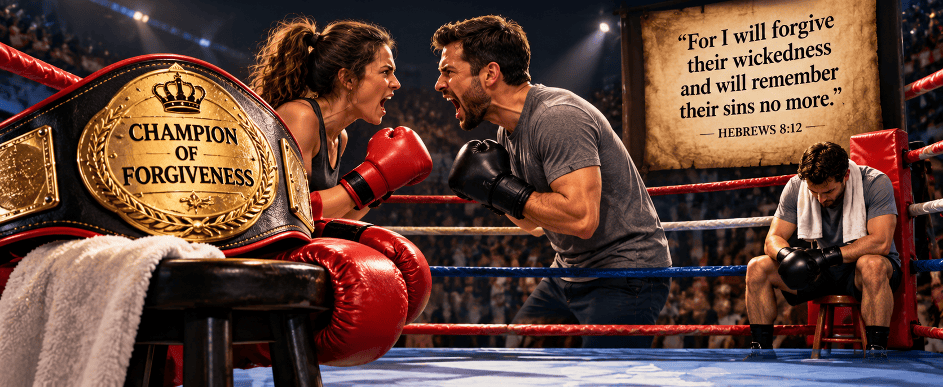
Chapter Four: Fighting the Good Fight
Learning How to Disagree Without Destroying Your Marriage
One of the things I tell every couple preparing for marriage is that they’re going to fight.
I don’t care how much they love each other.
I don’t care how compatible they seem to be.
And I don’t care how wonderful their relationship has been up to this point.
They’re going to have disagreements.
In fact, I sometimes tell couples that when two people never disagree, it may mean that one of them has simply given up on the relationship.
Now, I’m not suggesting that a healthy marriage requires shouting matches or constant arguments. Some couples work through their differences very quietly.
But two people who share their lives together are eventually going to see things differently.
And that’s okay.
The goal isn’t to eliminate every disagreement.
The goal is to learn how to handle disagreements in a way that strengthens the marriage instead of damaging it.
What Do Couples Fight About?
I usually begin this session by asking a simple question.
“What do married couples fight about?”
The answers are generally pretty predictable.
Money.
Disciplining children.
In-laws.
Time.
Priorities.
And sometimes, as one couple will inevitably point out, just plain stupid stuff!
They’re all good answers.
Because when two people share a home, a schedule, a bank account, and a future, they’re bound to disagree about some things.
But before we talk about how to fight, there’s something very important I want every couple to understand.
A Word About Abuse
No one is expected to live in an abusive relationship.
Not physical abuse.
Not verbal abuse.
Not emotional abuse.
There is absolutely no place for abuse in a Christian marriage.
Years ago, when I talked about this subject, I usually looked directly at the man.
I wanted him to understand that he had no right to physically intimidate or harm his wife.
And I still want every man to understand that.
But over the years, I’ve learned that I also need to look at the woman.
Because it’s not acceptable for a wife to haul off and hit her husband simply because he’s a man.
Abuse is abuse.
It doesn’t matter which spouse is responsible.
And no one should ever use Scripture, marriage vows, or the language of forgiveness to pressure someone into remaining in danger.
If abuse is taking place, the priority is safety and getting appropriate help.
Now, with that clearly understood, let’s talk about the ordinary disagreements that occur in every marriage.
Three Kinds of Fighters
I have a little illustration I use to help couples understand how they handle disagreements.
I call it:
Ali, Tyson, and Mayweather.
Three famous boxers.
Three very different approaches to fighting.
And three different ways people often handle disagreements in marriage.
Mike Tyson: The Screamer
The first type of fighter is what I call a Tyson.
Also known as a screamer.
A Tyson fighter tends to say exactly what’s on their mind.
If they’re upset, you’re going to know about it!
They don’t necessarily need time to think through everything before talking.
They want to get it all out there.
Right now.
And sometimes it can get pretty loud.
To someone who isn’t accustomed to that kind of confrontation, it can be uncomfortable and even frightening.
But the Tyson fighter may not understand why everyone is so upset.
After all, they’re just expressing how they feel!
Like Iron Mike in the boxing ring, they want to get the fight over with quickly.
Say what needs to be said.
Get everything out in the open.
Then move on.
When two Tyson fighters marry each other, they may have some lively disagreements!
But sometimes they also make up pretty quickly.
They’ve both said what they wanted to say, and now they’re ready to move forward.
Of course, being comfortable with confrontation doesn’t excuse yelling at, threatening, or intimidating a spouse.
A healthy disagreement still requires respect and self-control.
Muhammad Ali: The Silent Fighter
Then there are the Ali fighters.
Remember Muhammad Ali’s famous description of his boxing style?
“Float like a butterfly, sting like a bee.”
That’s a pretty good description of how some people handle disagreements.
And I know something about this particular fighting style.
Because this is mine!
When something bothers me, I don’t always want to talk about it immediately.
I need some time.
I need to think.
I need to process what happened and how I feel about it.
So I float around for a while.
And if someone asks, “Are you mad?”
I may say, “No.”
Even when I am!
Now, that’s not necessarily the best response, and it’s something an Ali fighter needs to work on.
But often, the reason we’re quiet is that we’re still trying to sort everything out.
Eventually, though, we’ll come back.
And when we do, we may have a pretty good idea of exactly what’s bothering us.
We’ve thought about it.
We’ve rehearsed the conversation in our minds.
And now we’re ready to tell you.
That’s when the butterfly finally stings like a bee!
The important thing for an Ali fighter is to remember that needing time to process is okay.
But leaving your spouse guessing indefinitely isn’t fair.
You can say, “I’m upset, but I need a little time to think before we talk about it.”
That gives your spouse some reassurance while allowing you the time you need.
Floyd Mayweather: The Fleer
Then there are the Mayweathers of the world.
I call them the fleers.
Floyd Mayweather was known for being difficult to hit.
He was a master at avoiding punches.
And that’s exactly what some people want to do when an argument begins.
Avoid it!
Get out of there!
Go for a drive.
Leave the room.
Find something else to do.
Anything to avoid the confrontation.
Now, I tell couples that sometimes walking away from an argument is actually a good idea.
Especially when emotions are running high.
Sometimes we need a little time to cool down.
But there’s one important condition.
If you leave the argument, you need to come back and deal with it.
Walking away to calm down can be healthy.
Walking away so you never have to discuss the problem isn’t.
Unresolved disagreements have a way of piling up.
And eventually, those unresolved problems can become much bigger than the original argument.
So if you’re a Mayweather fighter, it’s okay to take a break.
Just make sure your spouse knows you’re coming back to finish the conversation.
Nobody Gets to Be the Undefeated Champion
After describing these three fighting styles, I usually move to what I believe is one of the most important lessons in the entire session.
I look at the couple and tell them:
“Neither one of you is supposed to be the undefeated, undisputed champion of this marriage!”
Think about that for a moment.
Who wants to live with someone who always has to win?
Someone who always has to be right?
Someone who refuses to give an inch?
That would be a miserable marriage.
So I tell couples something that might sound a little strange.
Sometimes you’re supposed to take a dive!
That’s right.
Hit the mat.
Concede.
Give up.
Not because you suddenly believe you’re wrong.
And not because your opinion doesn’t matter.
But because you love the person you’re married to more than you love winning an argument.
Now, this isn’t about surrendering your safety, your dignity, or your deeply held convictions.
It’s about recognizing that many of the things couples argue about simply aren’t worth winning at the expense of the relationship.
Remember our definition of love?
Love means I’m willing to be uncomfortable so someone else can be comfortable.
Sometimes that means allowing your spouse to have their way.
Even when you think your way would be better!
And here’s something else I tell couples.
We like to imagine that disagreements will always be settled fifty-fifty.
You give a little.
I give a little.
We meet exactly in the middle.
But that’s rarely how real life works.
Sometimes it’s sixty-forty.
And sometimes it’s eighty-twenty.
Or even ninety-ten.
There are times when one spouse gives up much more than the other.
That’s not necessarily a problem when both people are committed to loving and considering each other, and the sacrifices don’t always fall on the same person.
Over time, both spouses should be willing to make sacrifices.
Because a marriage isn’t about keeping score.
It’s about loving each other.
And nobody wants to live with the undefeated, undisputed champion of the household!
When Someone Does Something Stupid
Now, not every disagreement is simply a matter of having different opinions.
Sometimes one of us does something careless.
Or thoughtless.
Or downright stupid!
And sometimes our actions genuinely hurt the person we love.
That’s when we need to talk about one of the most important ingredients in a healthy marriage.
Forgiveness.
I usually tell couples a story from my seminary days.
While I was attending seminary in Missouri, I worked as a bank teller.
Now, working with money all day requires you to be pretty careful.
And at the end of the day, your drawer is supposed to balance.
But occasionally, mine didn’t.
Sometimes I might be twenty dollars out of balance.
And when that happened, the bank would forgive me.
At least, that’s what I thought!
Because days later, or sometimes weeks or even months later, someone might remind me about that twenty-dollar mistake.
Apparently, I had been forgiven.
But nobody had forgotten!
And that’s when I talk with the couple about two very different approaches to forgiveness.
The world’s approach often sounds something like this:
“I forgive you, but I’m never going to let you forget what you did.”
And sometimes, whenever another argument comes along, we reach back into the past and bring up that old mistake again.
It’s almost like keeping a file cabinet of everything our spouse has ever done wrong.
And when we start losing an argument, we open the drawer and pull out another file!
But that’s not how God treats us.
Forgiving Like God Forgives
The Bible gives us a beautiful picture of God’s forgiveness.
Psalm 103:12 tells us that God removes our transgressions from us as far as the east is from the west.
In Hebrews 8:12, God promises to forgive wickedness and remember sins no more.
And Isaiah 43:25 tells us that God blots out our transgressions and does not remember our sins.
Now, that doesn’t mean God suddenly loses His memory.
It means He chooses not to hold forgiven sins against us.
And that’s the kind of forgiveness I want couples to learn to practice.
When your spouse makes a mistake, and there is genuine repentance and forgiveness, don’t keep bringing that mistake up every time you disagree.
Don’t use the past as a weapon.
Don’t keep score.
And don’t make your spouse feel as though one mistake will define them for the rest of their marriage.
Of course, forgiveness doesn’t mean pretending that serious harm never occurred. Trust may need to be rebuilt, consequences may remain, and forgiveness never requires someone to tolerate abuse.
But in the ordinary hurts and mistakes of married life, learning to forgive is absolutely essential.
And this is where our conversation becomes deeply spiritual.
Because I believe one of the best ways to learn how to forgive is to experience God’s forgiveness for ourselves.
Think about what Jesus has done for us.
He knows our failures.
He knows our sins.
He knows the things we’re ashamed of.
And yet He offers us forgiveness through His death and resurrection.
That’s amazing grace!
I sometimes tell couples that Christians ought to be among the happiest people in the world.
Not because everything in our lives is perfect.
But because we know that our sins have been forgiven.
God isn’t holding those forgiven sins over our heads.
And if we’ve experienced that kind of grace, shouldn’t we be willing to extend grace to the person we’ve promised to love?
That’s why I encourage couples to begin their marriage with a relationship with Jesus Christ.
Because sooner or later, you’re going to need more than romantic feelings.
You’re going to need patience.
Humility.
Grace.
And forgiveness.
And those are things God can help us develop.
Three Dots on a Piece of Paper
At the end of our counseling session, I take out a piece of paper.
And I draw three dots.
I explain that one dot represents the bride.
Another represents the groom.
And the third represents God.
Then I usually add something like this:
“Now, I’m not God. I’m just representing Him in this illustration!”
That generally gets a smile.
But then I become serious.
I tell them that someday, they may wake up and discover that there’s a great distance between them.
They don’t feel as close as they once did.
The conversations aren’t as meaningful.
The attraction isn’t quite what it used to be.
And they wonder what happened.
I tell them that when they feel a great distance between themselves and their spouse, it’s worth asking whether they’ve also allowed distance to grow between themselves and God.
Because I believe that when a husband and wife are both seeking to draw closer to God, He can help them draw closer to each other.
Now, that doesn’t mean Christian couples never have problems.
And it certainly doesn’t mean that every marital difficulty is caused by someone’s lack of faith.
But I believe that a shared commitment to God can provide a strong foundation for marriage.
So I leave them with this encouragement:
Stay close to God, and let Him help you stay close to each other.
A Final Word
When I began premarital counseling, I told the couple that my purpose wasn’t to talk them out of getting married.
It was to help them build a marriage that would last.
And I hope these sessions have helped them do exactly that.
We’ve talked about their dreams.
We’ve talked about love.
We’ve talked about habits that can destroy a relationship.
And now we’ve talked about learning to fight without destroying each other.
I don’t expect them to remember everything we’ve discussed.
But I hope they’ll remember a few things.
Keep dating each other.
Keep sharing your dreams.
Keep making deposits into each other’s Love Bank.
Don’t let destructive habits take over your relationship.
And when you disagree, remember that neither one of you needs to be the undefeated champion.
Sometimes the most loving thing you can do is take a dive.
And when you hurt each other—and sooner or later, you will—learn to forgive.
Because the goal of marriage isn’t to win every argument.
The goal is to build a life together, with God at the center of it.
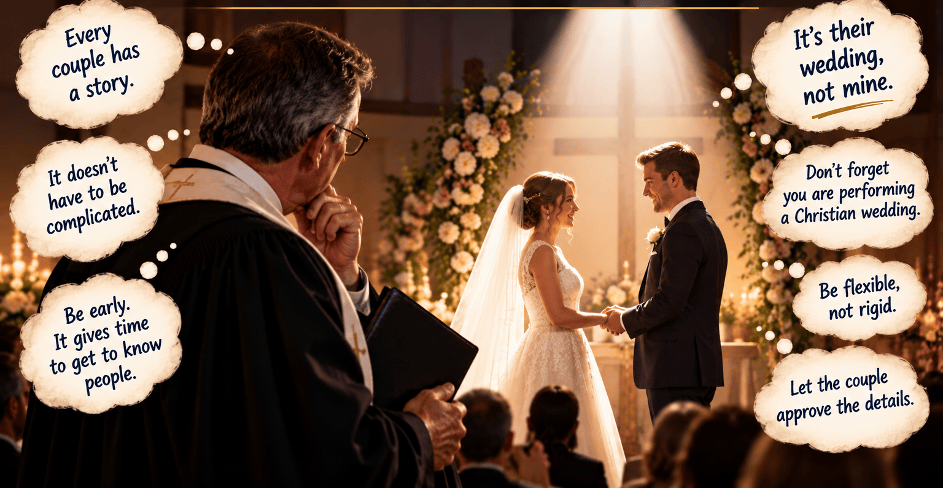
Part Two: Saying “I Do”
Chapter Five: It’s Their Wedding, Not Mine
Making a Standard Wedding Ceremony Personal
I’ve performed quite a few weddings over the years.
Some have been large, elaborate celebrations. Others have been small, intimate gatherings. Some have taken place in church sanctuaries, while others have been held in a variety of interesting locations.
But regardless of the setting, I’ve always tried to remember something.
It’s their wedding, not mine.
That may sound obvious, but I think it’s an important principle for pastors to remember.
After all, we’re the ones standing in front of everyone. We’re the ones leading the ceremony. And we’re the ones who have probably performed more weddings than the bride and groom have attended!
It’s easy to fall into the habit of doing everything the same way.
And there’s nothing necessarily wrong with using a standard wedding ceremony.
In fact, that’s exactly what I do.
I have a familiar structure that includes the traditional elements of a Christian wedding: the promises, the vows, the exchange of rings, the pronouncement, and the other important parts of the service.
I don’t feel the need to reinvent those things every time a couple gets married.
But there’s one part of the ceremony that I especially enjoy making personal.
The wedding message.
Every Couple Has a Story
One of the reasons I enjoy premarital counseling is that it gives me an opportunity to get to know the couple.
In our first session, I ask questions about how they met, what attracted them to each other, and some of their favorite experiences together.
We talk about their dreams.
We talk about their interests.
And sometimes we discover some pretty interesting things about each other!
But while we’re having those conversations, I’m also listening for something else.
I’m listening for an idea.
Something that might help me create a wedding message that is uniquely theirs.
Maybe they enjoy fishing.
Maybe they love hiking.
Perhaps one of them is a baseball fan.
Or maybe music has played an important part in their relationship.
Whatever it is, I’m looking for something I can use to help them understand marriage through an experience they already know and enjoy.
And here’s the fun part.
I usually don’t tell them what I’m planning.
I like to surprise them!
When their wedding day arrives, I want them to hear something in the message that makes them smile.
Something that makes them look at each other and think, “He’s talking about us!”
Because while I may use a standard wedding ceremony, I don’t want every couple to receive a standard wedding message.
A Good Wedding Message Doesn’t Have to Be Complicated
Now, I realize that some pastors may be thinking, “That sounds wonderful, but I’m not particularly creative.”
Well, let me encourage you.
You don’t have to be an extraordinary writer to create a personal wedding message.
You just have to be a good listener.
And you have to be willing to think about how something familiar to the couple might illustrate an important truth about marriage.
For example, if a couple enjoys hiking, you already have some wonderful possibilities.
Marriage is a journey.
Sometimes the path is easy.
Sometimes the trail becomes difficult.
There may be unexpected obstacles.
And it’s important that both people keep walking together.
If a couple enjoys fishing, you might talk about patience, preparation, or the importance of working together.
If they enjoy baseball, you have all sorts of possibilities involving teamwork, sacrifice, and staying in the game when things aren’t going your way.
And if they love music, you can talk about harmony, listening to each other, and making beautiful music together.
The point isn’t to come up with the cleverest illustration anyone has ever heard.
The point is to use something familiar to communicate something meaningful.
And when the illustration comes from the couple’s own interests, they’re much more likely to remember it.
Don’t Forget That You’re Performing a Christian Wedding
Of course, a personalized wedding message needs to be more than a clever illustration.
As a Christian pastor, I want to remind the couple that marriage is a gift from God.
I want them to understand that they’re making promises not only to each other but also before God.
And I want them to know that God can help them keep those promises.
So whatever illustration I choose, I try to connect it to the spiritual significance of marriage.
The hiking trail eventually leads us to the importance of walking with God.
The baseball illustration reminds us that love involves sacrifice.
The musical illustration can help us understand the beauty of two people learning to live in harmony.
The metaphor is simply a tool.
The message is about marriage, love, commitment, and God’s place in their relationship.
I never want the illustration to become more important than the truth I’m trying to communicate.
Let the Couple Approve the Ceremony
Now, there’s something else I do that I believe is extremely important.
I let the couple review the entire wedding ceremony before the wedding.
Not just the vows.
Not just the order of service.
The entire ceremony.
I want them to know what I’m planning to say and what they’re going to be asked to do.
After all, it’s their wedding!
I may enjoy surprising them with the direction of the message when I first prepare it, but I don’t believe the wedding day itself should contain surprises that make them uncomfortable.
I want them to feel confident about the ceremony.
If there’s something they don’t like, we can talk about it.
If there’s something they want changed, I’m willing to consider it.
And if I’ve misunderstood something about their story, I’d much rather discover that before we’re standing in front of all their family and friends!
This also gives them an opportunity to think about the promises they’re making.
Sometimes couples are so busy preparing for the wedding that they haven’t really considered the words they’re going to say.
Reviewing the ceremony gives them another opportunity to reflect on those promises.
And I believe that’s a good thing.
The Wedding Is Important, but the Marriage Is More Important
I enjoy weddings.
I enjoy seeing the excitement on the faces of the bride and groom.
I enjoy watching families celebrate.
And I especially enjoy the moment when two people make their promises to each other before God.
But I’ve also been a pastor long enough to know that the wedding ceremony is only the beginning.
The flowers will eventually wilt.
The decorations will come down.
The wedding cake will be eaten.
And the guests will go home.
Then the couple begins the much more important work of building a marriage.
That’s why I don’t want the wedding message to be nothing more than a few pleasant words that fill time during the ceremony.
I want it to remind the couple of something they’ll need years later.
Perhaps when they’re going through a difficult season, they’ll remember the hiking trail.
Perhaps when they’re struggling to communicate, they’ll remember the importance of making beautiful music together.
Or perhaps when they’re tempted to give up on each other, they’ll remember something about teamwork from a baseball illustration.
If that happens, then the wedding message has accomplished something worthwhile.
It has become more than part of a ceremony.
It has become a reminder of the promises they made.
A Few Examples You Can Borrow
In the following pages, I’m going to share several wedding messages I’ve used over the years.
Some involve hiking.
Some involve fishing.
Others involve horses, baseball, cars, weather, and music.
Each was developed with a particular couple in mind.
And I hope they’ll give you ideas for your own wedding ceremonies.
You’re welcome to adapt these illustrations to fit the couples you’re counseling.
In fact, that’s exactly what I hope you’ll do.
Don’t feel obligated to use my illustrations word for word.
Listen to your couples.
Get to know them.
Find out what makes them smile.
Discover what matters to them.
Then look for a way to connect those interests to the promises they’re making before God.
Because a wedding message doesn’t have to be complicated to be meaningful.
It simply needs to speak to the people standing in front of you.
And remember:
It’s their wedding, not yours.
You’re simply being given the privilege of helping them begin their marriage in the presence of God and the people they love.
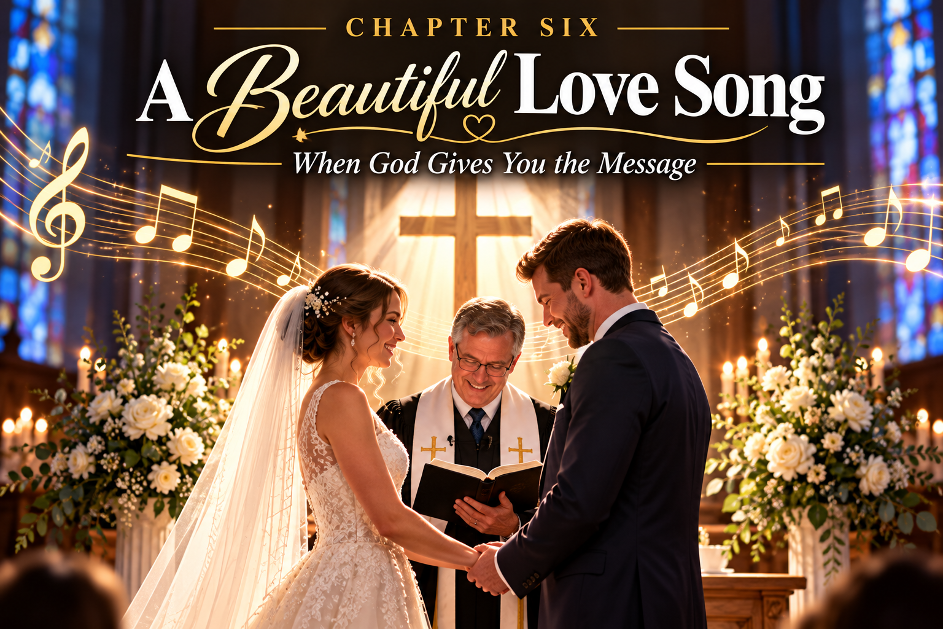
Chapter Six: A Beautiful Love Song
When God Gives You the Message
Over the years, I’ve discovered that our church’s praise team has been good for more than leading worship.
Apparently, it’s also been a pretty successful dating service!
There was a period when three couples from our praise team got married. I never realized that singing together on Sunday mornings could lead to so many wedding ceremonies.
One of those couples had known each other as friends before their relationship became romantic. He played bass, and she sang soprano.
As I thought about their relationship and began preparing their wedding ceremony, I knew I wanted to use music as the theme.
But what happened next is difficult to explain unless you understand how I approach ministry.
I believe God gave me the message.
Now, I realize that may sound overly spiritual to some people. But after all these years of ministry, I’ve learned that some of my best ideas don’t come from sitting at a desk trying to think of something clever.
They come when God puts something on my heart.
Sometimes I’ve spent hours trying to develop an idea. Other times, something comes together so quickly that I know I didn’t manufacture it.
This was one of those times.
I began thinking about the couple, their love for music, and the way two very different musical parts can come together to make something beautiful.
And almost immediately, the wedding message began to take shape.
I wasn’t struggling to find the next thought. The ideas just seemed to flow.
I believe God was giving me something special for this couple, and my job was simply to write it down.
Of course, that doesn’t mean I suddenly became a musical expert!
At one point, I had to go to Kristi and ask her which musical keys would blend together.
She helped me with the musical details.
God provided the inspiration.
And between the two of them, I had a wedding message!
A Wedding Message That Got People Talking
There’s another interesting part to this story.
A little over a year earlier, I had performed a wedding for another couple from our praise team. They were middle-aged adults and had very specific ideas about how they wanted their ceremony conducted.
They preferred that I have a limited speaking role.
And that was perfectly fine with me.
Remember, it’s their wedding, not mine.
By the time the musical wedding took place, this couple had moved on to begin their own ministry and start a church.
But they returned to attend the wedding of their friends.
After hearing A Beautiful Love Song, they approached me and asked where I had gotten the message.
I simply told them the truth.
“God gave it to me.”
And I believe He did.
That experience reminded me that God can use a wedding message to speak not only to the bride and groom but also to the people who have gathered to celebrate with them.
Sometimes we never know who else might need to hear what God has placed on our hearts.
The Pastor’s Job Is to Listen
I want to be careful here.
I’m not suggesting that every wedding message I prepare arrives fully formed from heaven.
I still study.
I still think.
I still write and revise.
And occasionally, I still need Kristi to explain something I don’t understand!
But I believe God cares about the people standing before me on their wedding day.
And I believe He can help me find the words they need to hear.
That’s why I try to listen carefully during premarital counseling.
I’m listening to the couple, but I’m also trying to listen to God.
Sometimes an illustration comes quickly.
Sometimes it takes longer.
But when something begins to come together, I’ve learned to pay attention.
I don’t want to manufacture a clever message just so people will compliment me afterward.
I want to give the couple something meaningful that will help them build a marriage that honors God.
And in this particular case, the message was about making beautiful music together.
I later adapted this illustration for another couple who enjoyed singing together, although their musical performances were more likely to take place in bars than in a church sanctuary.
The setting was different, but the principle was the same.
A good illustration can be used again, provided we take the time to make it personal to the couple standing before us.
The following is an adaptation of that wedding message. I’ve left out the couples’ names, but I’ve kept the central illustration and the encouragement I wanted them to remember:
Please don’t stop singing the song.
Sample Wedding Message: A Beautiful Love Song
One of the things I’ve enjoyed learning about the two of you is your love for music.
And today, you’re beginning something even more beautiful than the music you’ve made individually.
You’re beginning a love song together.
I believe God wants to write a beautiful love song through your marriage.
But there’s something important you need to understand about music.
Beautiful harmony doesn’t mean everyone sings the same note.
In fact, if everybody sings exactly the same note all the time, you’re not going to experience the richness that harmony can bring.
One of you may provide the bass notes.
The other may sing the higher notes.
And when those different sounds come together, they can create something neither one could produce alone.
Marriage is much the same way.
You are two different people.
You have different personalities.
Different strengths.
Different weaknesses.
And sometimes, different opinions!
The goal of marriage isn’t for one of you to become exactly like the other.
The goal is to learn how to live in harmony.
Sometimes that means listening carefully to the other person’s part.
Sometimes it means allowing the other person to take the lead.
And sometimes it means adjusting your own part so that the two of you sound better together.
You don’t have to sing the same note.
But you do need to sing the same song.
Every Love Song Has Different Verses
Now, when you think about a beautiful love song, you probably imagine something romantic.
And I hope there will be many romantic verses in your marriage.
There will be wonderful days.
Days when you laugh together.
Days when you celebrate something special.
Days when you look at each other and wonder how you could possibly have been so blessed.
Those will be beautiful verses.
But I want to remind you that not every verse of your love song will sound the same.
There will be some difficult verses.
There may be times when money is tight.
There may be times when you’re exhausted.
There may be times when you disagree about something important.
And there may even be days when the music doesn’t sound particularly beautiful.
That’s part of living life together.
But here’s what I want you to remember.
Please don’t stop singing the song.
When you have a disagreement, work through it.
When you hurt each other’s feelings, learn to forgive.
When life becomes difficult, don’t forget the promises you’re making today.
And when the music doesn’t sound the way you hoped it would, don’t give up on the song.
Keep singing.
Keep listening.
Keep loving.
Because some of the most beautiful music comes from people who have learned how to work through the difficult passages together.
Let God Direct the Music
There’s one more thing I want you to remember.
While the two of you are making this music together, I believe there’s Someone who knows how the entire song is supposed to sound.
God.
The One who brought you together wants to be involved in your marriage.
He knows the verses you haven’t experienced yet.
He knows the challenges you’ll face.
And He knows the beautiful possibilities that lie ahead.
So don’t try to write every note of your marriage without Him.
Invite Him into your decisions.
Ask Him to help you love each other.
Seek His guidance when you don’t know what to do.
And trust Him when the music of life becomes difficult to understand.
My prayer is that years from now, you’ll look back over your marriage and recognize that God has been directing a beautiful love song through your lives.
There will have been some wonderful verses.
There may have been some difficult ones.
But through it all, I hope you’ll have kept singing together.
Today you’re beginning a new song.
May it be filled with love, laughter, faithfulness, and the presence of God.
And whatever happens in the years ahead—
Please don’t stop singing the song.
A Few Thoughts for Pastors
What I like about this metaphor is that it can be adapted for almost any couple who enjoys music.
They don’t have to be professional musicians.
They don’t even have to sing particularly well!
The illustration works because most people understand that harmony requires different notes working together.
And the spiritual connection comes naturally.
We want God to direct the music of our marriage.
But I also believe the most memorable part of this message is the reminder that not every verse will be easy.
“Please don’t stop singing the song.”
That’s the line I hope couples will remember years later.
When they’re discouraged.
When they’re disappointed.
When they’re tempted to give up.
Because a beautiful marriage isn’t one that never experiences a difficult verse.
It’s one where two people keep making music together, with God helping them along the way.
And perhaps that’s the most important lesson I can share with another pastor.
Don’t simply search for a clever illustration.
Get to know your couple.
Pray for them.
Listen carefully.
And be open to the possibility that God may give you a message you never could have manufactured on your own.
Sometimes He may even give it to you so quickly that all you have to do is write it down.
Although you might still need to ask your wife a question or two!
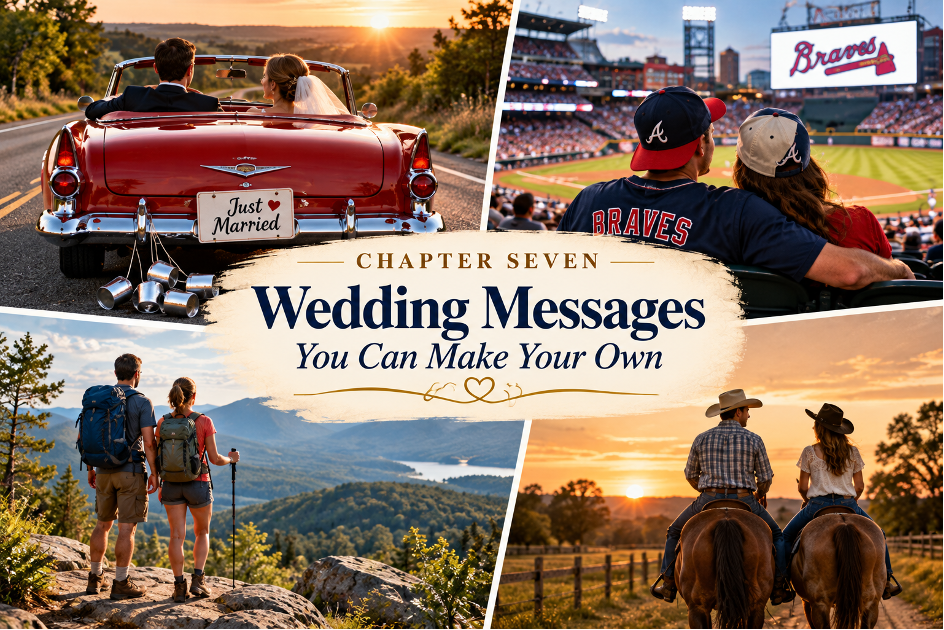
Chapter Seven: Wedding Messages You Can Make Your Own
1. A Marriage Built Like a Classic Car
The Story Behind the Message
“No one is good enough for my daughter.”
That’s what I told Brian when he asked for my blessing to marry Sarah.
And I meant it!
Actually, I feel that way about both of my daughters, Rachel and Sarah. I’m not sure any father ever believes there’s a man quite good enough for his little girl.
But I also told Brian something else.
“The most important thing is that you love Sarah and you love the Lord. And because of that, you have my blessing.”
I couldn’t have known when Sarah was growing up that automobiles would play such an important role in her love story.
You see, Sarah wasn’t particularly interested in learning to drive. She didn’t get her driver’s license until her senior year of high school. Even then, she wasn’t exactly eager to get behind the wheel.
Meanwhile, her older sister, Rachel, had gotten married and was preparing to move to England with her husband. That meant Sarah would inherit the car we had originally purchased for Rachel.
There was only one problem.
Sarah needed more practice driving!
When my girls went off to college, I always drove them there and then flew home. They attended a Nazarene college in Ohio, the same place where Kristi and I had met years earlier.
After Sarah arrived at college, she began dating one of Brian’s close friends. Meanwhile, Brian had a girlfriend back home in California.
But Sarah still needed someone to help her become more comfortable behind the wheel.
And Brian volunteered.
The first time I remember hearing about Brian was when Sarah casually mentioned that some fellow from California was helping her practice driving.
She seemed pretty happy about the arrangement!
I didn’t think too much about it at the time.
But by the summer, Sarah and Brian’s friend had broken up. Months later, after Brian’s relationship with his girlfriend had also ended, Sarah and Brian began dating.
And the rest, as they say, is history.
Apparently, those driving lessons turned out to be pretty important!
Brian came from a conservative family in the Los Angeles area. He and his father loved cars, especially restoring classic automobiles.
When I began preparing their wedding ceremony, I knew exactly what illustration I wanted to use.
Cars.
Now, I need to make a confession.
I don’t know much about automobiles.
I can barely tell the difference between a V-8 and a four-cylinder engine!
But I knew that Brian loved cars, and I knew that a car had helped bring him and Sarah together.
So I began thinking about how automobiles could teach us something about marriage.
And that became their wedding message.
Sample Wedding Message: The Love for Cars Metaphor
Brian and Sarah, I believe God has brought you together.
You are not standing here today by accident.
Sarah, I remember when you were born. You brought so much joy into our lives, and you’ve continued to bless us ever since. You love Jesus, and you’ve grown into a wonderful young woman. Your mother and I couldn’t be prouder of you.
Brian, it takes a special man to deserve our Sarah, and I believe you are that man. I appreciate the way you care for her, your strength, and your support. Most importantly, you love the Lord, and I believe He will guide you throughout your marriage.
Now, let’s talk about cars!
As most of you know, I’m not exactly an automobile expert. I can’t tell the difference between a V-8 and a four-cylinder engine.
But cars have played a pretty significant role in Brian and Sarah’s relationship.
In fact, the first time I remember hearing about Brian was when Sarah mentioned that some fellow from California was teaching her to drive.
And apparently, she didn’t mind those driving lessons one bit!
I later discovered that Brian and his father love restoring classic cars.
So today, I want to remind you both that marriage is a lot like owning an automobile.
A Good Marriage Requires Maintenance
The first similarity is pretty obvious.
Both cars and marriages require maintenance.
Brian, you know that you can’t purchase an automobile, neglect it for years, and expect it to perform like it did when it was new.
You have to take care of it.
You have to set aside time to maintain it.
Sometimes it needs a little extra attention.
And the same is true of marriage.
Right now, taking care of each other probably comes pretty naturally.
You’re excited about being together.
You want to spend time with each other.
You’re willing to do almost anything to make the other person happy.
But as the years go by, life will get busy.
There will be jobs, responsibilities, bills, and perhaps children.
And one of the greatest dangers to a marriage isn’t necessarily some terrible event.
Sometimes it’s simply neglect.
So make time for each other.
Keep dating.
Keep talking.
Keep doing those little things that made you fall in love in the first place.
Don’t wait until something breaks down before you decide to give your marriage some attention.
Don’t Forget the Owner’s Manual
There’s another similarity between cars and marriage.
Most automobiles come with an owner’s manual.
It’s usually somewhere in the glove compartment.
Unfortunately, a lot of people never bother to read it until something goes wrong!
But that manual contains important information about how the vehicle was designed to operate.
And God has given us a manual for marriage.
It’s called the Bible.
Brian and Sarah, don’t wait until your marriage is in trouble before you begin looking for God’s answers.
Read His Word.
Learn what He says about love.
Learn what He says about forgiveness.
Learn what He says about patience, kindness, and putting someone else’s needs ahead of your own.
Allow the Word of God to guide your relationship.
It can help prevent a lot of problems before they ever develop.
Let God Be Your GPS
There’s one more thing I want you to remember.
Most newer automobiles have a GPS.
You tell it where you want to go, and it helps you find the way.
Sometimes it even shows you a picture of your destination.
And sometimes, if you’re anything like me, you become convinced that you know a better route!
But here’s what I want you to understand.
The Holy Spirit wants to be the GPS for your marriage.
He wants to guide you.
He wants to help you make decisions.
And He wants to lead you into the future God has prepared for you.
Now, an automobile’s GPS can make a mistake.
It might take you to the wrong address.
It might send you down a road that’s closed.
But the Holy Spirit will never make a mistake.
There may be times when you don’t understand where God is leading.
There may be times when you think you know a shorter or easier route.
But trust Him.
He knows where He’s taking you.
And I believe He has some wonderful adventures prepared for your marriage.
Brian and Sarah, take care of each other.
Keep God’s Word close.
And allow the Holy Spirit to guide you.
May your marriage, like a beautifully restored automobile, become even more precious as the years go by.
And may God bless every mile of your journey together.
Amen.
A Note to Pastors
What made this message personal wasn’t simply that the groom enjoyed restoring cars.
It was the fact that automobiles had played a role in bringing the couple together.
That’s what I want you to look for when you’re preparing a wedding message.
Sometimes the illustration will come from a hobby.
Sometimes it will come from a shared experience.
And sometimes it will come from something as ordinary as a young woman needing someone to teach her how to drive!
You don’t have to understand everything about the couple’s interests to develop a meaningful message. I certainly didn’t become a mechanic before performing my daughter’s wedding.
But I knew enough about their story to make the illustration personal.
The message itself was simple: maintain your marriage, follow God’s Word, and trust the Holy Spirit to guide you.
Those truths apply to almost every Christian marriage.
The automobile illustration simply helped this particular couple hear them in a way they could remember.
2. Marriage Is a Journey: The Hiking Metaphor
The Story Behind the Message
Sometimes preparing a personalized wedding message is easy.
A couple might share a favorite hobby, have an interesting story about how they met, or enjoy an activity that practically begs to become a wedding illustration.
And then there are those couples who don’t give you much to work with!
That was somewhat the case with Lee and Olivia.
They were a wonderful young couple, and I had known Olivia since she was a little girl. I was delighted to have the privilege of performing their wedding.
But as we went through premarital counseling, I struggled to find something from their relationship that I could build a wedding message around.
I asked about their interests.
I asked what they enjoyed doing together.
And when we discussed their favorite kinds of dates, they mentioned that they enjoyed taking walks and hiking.
That was about all I had!
Now, I don’t want to leave the impression that these two were experienced hikers who spent every weekend exploring mountain trails.
They weren’t.
In fact, I’m not sure how much hiking they’ve done since getting married!
But they enjoyed walking together, and that was enough to get me thinking.
Marriage itself is a journey.
There are beautiful sights along the way.
There are unexpected turns.
There are steep climbs.
And sometimes the most rewarding experiences come after we’ve walked through the most difficult stretches.
Suddenly, I had my illustration.
I didn’t need to pretend that hiking was the central passion of their lives. I simply needed to take something they had mentioned and use it to communicate some important truths about marriage.
And that brings me to something I want other pastors to understand.
You don’t need an extraordinary story to prepare a personalized wedding message.
Sometimes all you need is one small detail and a willingness to think about how it connects with the marriage this couple is beginning.
Sample Wedding Message: The Hiking Marriage Metaphor
Lee and Olivia, I believe God has brought you together.
As we’ve talked about your relationship, I’ve been reminded of how much the Lord has already done in your lives. You’ve experienced wonderful moments together, and you’ve also persevered through some difficult days.
Olivia, I’ve known you since you were a little girl going shopping with Aunt Janice. You’ve always been sweet and kind, and you’re just as beautiful on the inside as you are on the outside.
Lee, it takes a special person to deserve our Olivia, and I believe you are that man. I appreciate the way you care for her and how you’ve looked out for her from the beginning of your relationship.
It’s going to be a joy to watch the two of you grow together in the years ahead.
Your future is so bright.
During our premarital counseling, you mentioned that you enjoy taking walks together and occasionally hiking.
And that got me thinking.
Marriage is a lot like hiking.
Let me explain.
Every Hike Is a New Experience
One of the interesting things about hiking is that no two hikes are ever exactly alike.
Even if you walk the same trail you’ve traveled a dozen times before, there’s always something new to discover.
Maybe the flowers are blooming.
Maybe the leaves are changing colors.
Maybe you notice something beautiful that you walked right past the last time.
Nature is always changing.
And marriage is much the same way.
Lee and Olivia, your relationship will change as the years go by.
You’ll experience different seasons of life.
There will be new adventures.
New responsibilities.
New discoveries.
And hopefully, many wonderful surprises.
One of the joys of marriage is that you get to experience those changes together.
The person you’re marrying today is someone you’ll continue getting to know for the rest of your life.
So don’t assume you’ve already seen everything there is to see.
Keep discovering new things about each other.
Keep enjoying the changing seasons.
And thank God for the privilege of sharing the journey.
Don’t Rush Past the Beautiful Moments
When you first arrive at the beginning of a hiking trail, there’s usually a sense of excitement.
You wonder what lies ahead.
What will you see?
What will you experience?
What beautiful sights might be waiting around the next turn?
Lee and Olivia, that’s exactly where you are today.
You’re standing at the beginning of a wonderful journey together.
And I hope you’re excited about what lies ahead.
But let me offer you a little advice.
Don’t get in such a hurry to reach the next destination that you miss the beauty along the way.
Life has a way of keeping us busy.
We become so focused on tomorrow that we sometimes forget to enjoy today.
We think life will be wonderful when we get that better job.
Or when we buy that house.
Or when we reach some other goal we’ve been working toward.
And there’s nothing wrong with having dreams.
But don’t allow those dreams to rob you of the joy God has placed in front of you right now.
Take time to enjoy each other.
Laugh together.
Celebrate the little things.
And remember that some of the most beautiful moments in marriage are the ordinary ones.
Some of the Best Views Come After the Hardest Climbs
Anyone who has ever spent much time hiking knows that the trail isn’t always straight.
Sometimes it winds around unexpected turns.
Sometimes it becomes rocky.
And sometimes the climb is pretty steep.
There may even be moments when you wonder why you decided to take that particular trail in the first place!
But here’s something I’ve noticed.
Often, the most breathtaking views come after the most difficult climbs.
And marriage can be like that.
Lee and Olivia, I wish I could promise that every day of your marriage will be easy.
But it won’t.
There will be difficult moments.
There will be disagreements.
There will be times when you’re tired, discouraged, or frustrated.
And there may be days when the journey feels harder than you expected.
When those moments come, don’t give up on each other.
Keep walking.
Keep talking.
Keep forgiving.
And keep trusting God.
Sometimes the most meaningful moments in a marriage come after a husband and wife have worked through something difficult together.
You may discover a depth of love and commitment you never would have experienced without that climb.
So when the path becomes difficult, remember that God may have something beautiful waiting just ahead.
The Journey Can Make You Stronger
One of the best reasons to go hiking is that it’s good for your health.
Your heart gets a workout.
Your lungs get a little stronger.
And after a good walk, you may even sleep better that night!
But I believe a good marriage can also make us healthier people.
Not simply physically, but emotionally and spiritually.
Lee and Olivia, marriage will give you opportunities to become better people than you could have imagined.
You’ll learn how to love more deeply.
You’ll discover how to be more patient.
You’ll have opportunities to practice forgiveness.
And you’ll learn that sometimes the greatest joy comes from putting another person’s needs ahead of your own.
Marriage has a way of revealing things about ourselves that we might otherwise never notice.
And while that isn’t always comfortable, it can be a wonderful opportunity for growth.
My prayer is that your marriage will help both of you become more like Jesus.
That you’ll be kinder.
More compassionate.
More forgiving.
And more aware of the beauty God has placed in your lives.
Let God Be Your Guide
There’s one final thing I want you to remember about hiking.
A journey can be even more enjoyable when you have a good guide.
Someone who knows the trail.
Someone who understands the difficult places.
Someone who can point out beautiful sights you might otherwise miss.
And Lee and Olivia, I believe the Lord wants to be that guide for your marriage.
He knows the journey that lies ahead.
He knows the challenges you’ll face.
And He knows the wonderful experiences He’s prepared for you.
So listen to Him.
Seek His direction.
Allow His Word to guide your decisions.
And when the path becomes difficult, remember that you don’t have to find your way alone.
The Lord wants to walk with you.
He wants to strengthen your love.
And He wants to lead you into experiences you might never have discovered on your own.
Lee and Olivia, may your marriage be filled with wonderful adventures, beautiful discoveries, and a lifetime of walking together.
And may the Lord guide every step of your journey.
Amen.
A Note to Pastors
I think this particular wedding message illustrates something important about preparing personalized ceremonies.
Sometimes you have to work with very little.
Lee and Olivia weren’t hiking enthusiasts. They didn’t have a dramatic story about climbing a mountain together or getting engaged beside a waterfall.
They simply mentioned that they enjoyed taking walks and hiking.
And that was enough.
I didn’t need to exaggerate their interest or pretend that hiking was the defining activity of their relationship.
I simply used it as a starting point.
The illustration gave me an opportunity to talk about several important truths concerning marriage: enjoying the present, growing through difficult experiences, becoming better people, and allowing God to guide our lives.
Those are truths that could have been communicated through many different illustrations.
But because this couple had mentioned walking together, the hiking metaphor gave the message a personal connection.
Here’s something else I’ve learned.
Not every detail you discover during premarital counseling belongs in the wedding ceremony.
Some things are shared in confidence. Other things might embarrass the couple or bring unnecessary attention to a difficult part of their lives.
Just because you know something about a couple doesn’t mean you need to share it with everyone attending their wedding.
Our goal isn’t to tell the most interesting story we know.
Our goal is to bless the couple.
So listen carefully during counseling. Look for those little details that might become meaningful illustrations. And be sensitive about what should remain private.
Sometimes God will give you a remarkable story to work with.
And sometimes all you’ll have is a couple who enjoys taking a walk.
Either one can become a meaningful wedding message when we approach it prayerfully and thoughtfully.
3. Marriage Is Like Fishing: One Illustration, Two Weddings
The Story Behind the Messages
One of the questions pastors might ask is whether it’s appropriate to use the same wedding illustration more than once.
My answer is absolutely!
As long as we’re making the message personal to the couple standing before us.
I’ve used fishing as a marriage metaphor for two different couples. Both enjoyed fishing, and both gave me an opportunity to talk about patience, learning from experience, and understanding the needs of your spouse.
But the stories behind these weddings were quite different.
The first groom had grown up in our church. His family loved fishing, and it was something he had enjoyed for years.
After graduating from high school, however, he hadn’t attended church very often.
When he asked me to perform his wedding, I was delighted.
Not simply because I enjoy weddings, but because it gave me an opportunity to reconnect with someone I had known since childhood.
It also gave me an opportunity to get to know his future wife.
And that was a blessing.
As we spent time together preparing for their marriage, I began developing a relationship with her as well.
I still value that connection.
My prayer is that God will continue using those relationships to draw them closer to Him.
After all, my calling isn’t simply to help couples have a beautiful wedding day.
It’s to help people know Jesus.
Now, this couple loved fishing. In fact, the groom proposed to his future wife while they were on a boat.
That gave me a natural illustration for their wedding message.
But the second fishing wedding had an entirely different family connection.
Sometimes You’re Marrying the Whole Family!
McKenzie grew up in our church.
She came from a close-knit family with two older brothers. And when I say close-knit, I mean close-knit!
Bryce wasn’t simply marrying McKenzie.
He was joining the whole family!
And I suspect he understood that pretty early in their relationship.
One of this family’s traditions was an annual vacation to West Virginia.
Fishing was always a big part of those trips.
And because I knew the family so well, I would hear the reports afterward.
Who caught the most fish?
Who caught the biggest fish?
And who had the best fishing story of the week?
Now, McKenzie could hold her own with those two older brothers.
In fact, she frequently caught some of the biggest and best fish!
So when I began preparing their wedding message, fishing seemed like an obvious choice.
But there was another reason I liked the illustration.
I knew it would connect not only with McKenzie and Bryce but also with the family members sitting in the congregation.
They would understand the references.
They would remember those vacations.
And they might even smile when I mentioned McKenzie’s fishing success.
That’s one of the beautiful things about a personalized wedding message.
Sometimes you’re speaking to more than the couple standing in front of you.
You’re reminding an entire family of the love and memories that have helped bring everyone to this moment.
So I used the same basic fishing illustration for both weddings.
But I personalized the introductions to fit each couple.
And I believe that’s perfectly appropriate.
The message doesn’t have to be entirely new. It just needs to be genuinely personal.
Sample Wedding Message: The Fishing Marriage Metaphor
McKenzie and Bryce, I believe God has brought you together.
McKenzie, I’ve known you since you were a little girl. You’ve always been beautiful on the inside and outside. You’re honest, hardworking, and strong-willed.
And having grown up with two older brothers, I suspect that strong will has served you pretty well!
You’ve grown into a wonderful young woman, and you’ve made us proud.
Bryce, it takes a special man to deserve our McKenzie, and I believe you are that man.
I appreciate the way you care for her, your strength, and your keen mind.
I look forward to watching the two of you grow together in the years ahead.
Now, as most of you know, McKenzie and Bryce enjoy fishing.
And from what I’ve heard about those annual family trips to West Virginia, McKenzie frequently catches the biggest and best fish!
So today, I thought it might be appropriate to remind you that marriage is a lot like fishing.
Fishing and Marriage Both Require Patience
First, fishing requires patience.
I’m a little surprised I didn’t hear a few amens!
You can’t always expect to throw your line into the water and immediately catch a fish.
Sometimes you have to wait.
And wait.
And wait some more.
Marriage is much the same way.
I wish I could promise that every day of your marriage would be like dropping your hook into the water and immediately getting a bite.
But it won’t.
There will be times when things don’t happen as quickly as you’d like.
There will be moments when you don’t understand each other.
And there will be days when your patience is tested.
But don’t give up.
Give each other grace.
Learn to wait on each other.
And remember that some of the most memorable moments in life come to those who are willing to be patient.
As special as your love is today, I believe it can become even better as the years go by.
Learn From Your Experiences
Now, patience alone won’t catch you a fish.
Good fishermen learn from experience.
They remember where the fish were biting.
They remember which places produced the best results.
And they remember what didn’t work!
The same principle applies to marriage.
Pay attention to the things that bring joy to your relationship.
Remember the activities you enjoy doing together.
Remember the words that encourage your spouse.
And remember the little things that make the other person feel loved.
But good fishermen also know something about checking the temperature.
Sometimes the conditions simply aren’t right.
And if you insist on fishing anyway, you may end up frustrated.
Marriage requires that same kind of wisdom.
There may be moments when a conversation becomes too heated.
You both may be tired.
You may be frustrated.
And you may not be in the best frame of mind to work through a disagreement.
Sometimes the wisest thing you can do is allow things to settle down before continuing the conversation.
That doesn’t mean ignoring the problem.
It simply means recognizing that the timing of a conversation can make a big difference.
Learn from your experiences.
And use what you’ve learned to make your marriage stronger.
Know What Bait to Use
There’s one more thing every successful fisherman understands.
You have to know what bait to use!
You can spend hours fishing with the wrong bait and never catch a thing.
A good fisherman learns what the fish are looking for.
And I think there’s an important lesson there for marriage.
Successful marriages require us to think about what the other person needs.
Not simply what we want.
Not simply what makes us happy.
But what makes our spouse feel loved and appreciated.
And that isn’t always easy.
Sometimes we’re in a hurry.
Sometimes we’re tired.
And sometimes we simply want our own way.
If I’m honest, I’ll tell you that even after years of marriage, I’m still learning how to understand my wife.
And I’m pretty sure she’s still trying to figure me out!
But here’s the good news.
There’s Someone who understands both of you perfectly.
And that’s the Lord.
God knows your hearts.
He knows your needs.
And He wants to help you love each other well.
So ask Him for wisdom.
Ask Him to help you understand your spouse.
And ask Him to show you how to demonstrate love in ways that will be meaningful to the other person.
McKenzie and Bryce, I hope you have many wonderful fishing trips in the years ahead.
I hope you catch some big fish.
And Bryce, I hope you occasionally catch one bigger than McKenzie’s!
But more than anything, I pray that your marriage will be filled with patience, understanding, and a love that grows deeper with every passing year.
And may the Lord guide you through every adventure you experience together.
Amen.
A Note to Pastors: One Message, Different Opportunities
There are two lessons I hope you’ll take away from these weddings.
The first is that you don’t have to start from scratch every time you prepare a wedding message.
If you’ve developed a meaningful illustration about fishing, hiking, music, or some other activity, there’s nothing wrong with using it again.
But don’t simply change the names at the top of the page.
Listen to the couple.
Learn their story.
And find a way to make the message personal.
The second lesson may be even more important.
Don’t overlook the ministry opportunities that come with performing a wedding.
In the first fishing wedding, I had the privilege of reconnecting with a young man who had grown up in our church but had become less involved after high school.
Through the counseling and wedding preparations, I also developed a meaningful relationship with his future wife.
That relationship matters to me.
And I pray that God will continue using it.
In the second wedding, I had the opportunity to celebrate a young woman I had watched grow up in our congregation.
I also had the opportunity to connect with her entire family through something they loved doing together.
Those are two very different pastoral experiences.
But both remind me that a wedding is about much more than the ceremony itself.
It’s about people.
It’s about relationships.
And it’s about opportunities to demonstrate the love of Jesus.
Sometimes a wedding opens a door that has been closed for years.
Sometimes it strengthens relationships we’ve enjoyed for decades.
And sometimes it introduces us to people we might never have gotten to know otherwise.
So yes, use a fishing illustration more than once if it fits.
But remember that the illustration is simply a tool. The people are the ministry.
4. Love, Patience, and Horses: Learning From the Couple
The Story Behind the Message
Some of the children who have grown up in our church have become like extended family to Kristi and me.
Corey was one of those kids.
He was the youngest son of Curtis and Regina, a family we’ve known and loved for years.
And Corey was quite a character!
When he was little, my daughter Rachel gave him the nickname “Corey Monster Martin.”
Now, I’m not sure Rachel used that nickname more than once.
But Kristi apparently thought it was too good to let go.
And she kept it going for decades!
Fortunately, Corey grew out of much of his mischievousness and became a fine young man.
So when he asked me to perform his wedding, I was delighted.
His future wife, Sydney, was someone I didn’t know nearly as well.
By the time they were preparing to get married, Corey had moved to a horse farm with Sydney in the Aiken area, about an hour from our church.
And I quickly learned something important about Sydney.
She loved horses.
Corey loved Sydney.
And that was enough to give me an idea for their wedding message!
Now, there was only one problem.
I didn’t know the first thing about training horses.
I’ve always admired those beautiful animals, but I’m certainly not a horse trainer.
In fact, the thought of stepping into an arena with an animal that powerful makes me a little nervous.
But I knew that horses were important to Sydney and her family.
And I wanted the wedding message to connect with them.
So I began thinking about the qualities required to train a horse.
Courage.
Patience.
And love.
Those sounded like pretty good qualities for a marriage, too.
But I also knew that having a good illustration wasn’t enough.
I needed to make sure I wasn’t saying something foolish about a subject I didn’t understand.
So I asked questions.
I talked with people who knew more about horses than I did.
And when I prepared the wedding message, I gave Sydney an opportunity to read it and make sure I had gotten things right.
That’s something I would encourage every pastor to do.
When you’re using an illustration from a world you don’t understand, let the people who live in that world help you.
It doesn’t diminish the message.
It makes it better.
And it communicates something important to the couple: you care enough about them to get the details right.
Sample Wedding Message: The Love of Horses Marriage Metaphor
Corey and Sydney, I believe God has brought you together.
Corey, I’ve known you since you were a little boy.
You’ve always been full of energy and perhaps just a little mischievous!
But I’ve watched you grow into a fine young man.
You’re hardworking, kindhearted, and willing to help others.
You’ve made us proud.
Sydney, from the moment I met you, I could see that you were someone special.
You carry yourself with confidence, and you have a compassionate heart.
We’re thankful that God has brought the two of you together.
Now, as most of you know, Corey and Sydney love animals, especially horses.
And so I thought it might be fitting to remind them that marriage is a little like training a horse.
Let me explain.
It Takes Courage
The first thing I’ve learned about working with horses is that it requires courage.
Think about it.
You’re stepping into an arena with an animal that’s much bigger and stronger than you are.
And you’re hoping to develop a relationship in which that animal learns to trust you.
I don’t know about you, but I think that takes some bravery!
Yet there’s something beautiful about the relationship between a horse and the person who cares for it.
With training, patience, and trust, that horse can experience things it might never have experienced otherwise.
It can travel new places.
It can learn new skills.
And it can develop a remarkable relationship with its owner.
Marriage also requires courage.
You’re making a lifelong commitment to another person.
You’re promising to love them through circumstances you haven’t even experienced yet.
And you’re trusting that together, with God’s help, you can build something beautiful.
Marriage isn’t for the fainthearted.
But Corey and Sydney, I believe that together you can go places and experience things you never would have experienced alone.
So be courageous.
Don’t be afraid of the journey ahead.
And remember that God will give you the strength you need.
It Takes Patience
Now, I would imagine that training horses also requires a great deal of patience.
After all, horses are a little like people.
Some days they cooperate beautifully.
And other days, well, they seem to have a mind of their own!
Sometimes the harder you try to make something happen, the more resistance you encounter.
A good trainer learns when to keep working and when it’s time to step back.
There will be another day.
And the horse isn’t going anywhere.
Now, I think that’s a pretty good lesson for marriage!
Corey and Sydney, there will be times when you don’t understand each other.
There will be days when one of you is tired or frustrated.
And there may be moments when the harder you push, the less progress you seem to make.
When those moments come, remember the importance of patience.
You don’t have to settle every disagreement in five minutes.
Sometimes it’s better to take a little time, calm down, and return to the conversation when you’re both ready.
The important thing is that you remain committed to working through things together.
I’m a little surprised I haven’t heard an amen or two from the married couples in the congregation!
Patience is one of the greatest gifts you can give your spouse.
And the longer you’re married, the more opportunities you’ll have to practice it.
Most Importantly, It Takes Love
There’s one more thing I’ve learned about people who work with horses.
They love those animals.
And sometimes that love is difficult to explain to someone who doesn’t share it.
They’re willing to spend hours caring for them.
They’re willing to work through frustrating days.
And even when things don’t go the way they hoped, they don’t simply stop caring.
It’s a love that keeps showing up.
Corey and Sydney, I believe God has placed a special love in your hearts for each other.
And I believe He wants that love to continue growing.
There will be wonderful days when loving each other seems effortless.
But there will also be days when love requires a decision.
A decision to be patient.
A decision to forgive.
A decision to put the other person’s needs ahead of your own.
And that’s where your relationship with God becomes so important.
The Lord wants to fill your hearts with a love that goes beyond what you can produce on your own.
He wants to help you love each other even when you’re frustrated.
He wants to help you forgive when you’ve been hurt.
And He wants to teach you how to care for each other with the same patience and kindness He has shown to you.
Corey and Sydney, I suspect there will be many horses in your future.
And I imagine those horses will continue teaching you lessons about courage, patience, and love.
My prayer is that you’ll carry those same qualities into your marriage.
Be courageous.
Be patient.
And never stop loving each other.
May the Holy Spirit help you build a marriage that honors God and brings joy to everyone who knows you.
Amen.
A Note to Pastors: You Don’t Have to Know Everything
I hope this illustration encourages pastors who sometimes feel intimidated by a couple’s interests.
You may be asked to perform a wedding for people who love horses, motorcycles, hunting, sailing, or some other activity you know very little about.
That’s okay.
You don’t have to become an expert.
But you do need to be humble enough to ask questions.
In this case, I knew Corey very well. I’d watched him grow up in our church.
But I didn’t know Sydney nearly as well.
And because horses were so important to her and her family, I wanted to develop a message that would speak to them.
That required me to learn something new.
It also required me to let Sydney review what I had written.
I didn’t want to stand in front of her family and say something about horses that everyone in the room knew was wrong!
But there was another benefit to asking for her input.
It gave us an opportunity to connect.
She wasn’t simply the young woman marrying a boy who had grown up in our church.
She was someone with her own interests, experiences, and knowledge.
And I wanted her to know that those things mattered to me.
That’s one of the reasons I like giving couples an opportunity to review their wedding ceremony before the big day.
It allows them to make sure they’re comfortable with what I’m planning to say.
It helps me avoid embarrassing mistakes.
And sometimes it makes the message better than it would have been without their input.
So don’t be afraid to venture into unfamiliar territory when preparing a wedding message.
Just remember to ask for directions!
You don’t have to be the expert in the room. You just have to be a pastor who cares enough to listen and learn.
5. Marriage Is a Team Sport: The Baseball Metaphor
The Story Behind the Message
One of the great blessings of pastoring the same church for many years is watching children grow into adults.
You baptize them, teach them, watch them develop their gifts, and sometimes have the privilege of performing their weddings.
Brooke was one of those young people.
She grew up in our church, and music was an important part of her life. She and her father sang in our praise team.
When Brooke was in high school, she also sang with three other girls: my daughter Sarah, Olivia, and Jeff Williams’ daughter Kaylee.
They called themselves BOSK.
The name came from the first letters of their names.
Now, I don’t know that BOSK ever made it onto the Billboard charts, but we certainly enjoyed hearing those girls sing!
And there’s something special about watching young people use their talents for the Lord and then seeing where God takes them in the years ahead.
When Brooke decided to marry Connor, I was delighted to be part of their wedding.
Connor was a fine young man who genuinely cared for Brooke.
And I soon discovered that the two of them had something in common.
They loved sports.
Especially baseball.
And especially the Atlanta Braves!
But there was something even better about this illustration.
Connor had been a pitcher in high school.
And Brooke had been a catcher.
Now, if you know anything about baseball, you know that the pitcher and catcher have a special relationship.
They work together throughout the game.
They communicate constantly.
And they depend on each other.
Suddenly, I had a wonderful illustration for their marriage.
I didn’t have to stretch very far to find a connection.
They already understood what it meant to work together as a team.
All I needed to do was help them see how those same principles applied to marriage.
Sample Wedding Message: The Baseball Metaphor for Marriage
Connor and Brooke, I believe God has brought you together.
Brooke, I’ve known you since you were a little girl.
You’ve always been beautiful on the outside and the inside. You love Jesus, and you’ve allowed His light to shine through your life.
You’ve grown into a wonderful young woman, and you’ve made us proud.
Connor, it takes a special man to deserve our Brooke, and I believe you are that man.
I appreciate the way you care for her, your strength, and your support.
I believe the two of you have a wonderful future ahead.
Now, as most of you know, Connor and Brooke love baseball.
And they especially love the Atlanta Braves!
So today, I thought it might be appropriate to remind them that marriage is a lot like baseball.
Let me explain.
Marriage Is a Team Sport
The first thing we know about baseball is that it’s a team sport.
You can’t play it by yourself.
It doesn’t matter how talented one player might be. You need other people to be successful.
And marriage is much the same way.
Connor and Brooke, from this day forward, you’re on the same team.
You’re not competing against each other.
You’re working together.
And that’s something both of you should understand particularly well.
Connor, you were a pitcher in high school.
In many ways, you’ll sometimes feel like you’re standing on the mound in your marriage.
There will be responsibilities.
There will be decisions to make.
And there will be days when you don’t have your best stuff!
But fortunately for you, there’s someone behind home plate.
Brooke was a catcher in high school.
And I’ve always believed that the catcher has to be one of the smartest players on the field.
The catcher has to understand what’s happening.
The catcher has to know the strengths and weaknesses of the players.
And the catcher has to help the pitcher make good decisions.
Connor, Brooke is going to give you some signals throughout your marriage.
And if you’re smart, you won’t shake them off too often!
She has your best interests at heart.
But Brooke, there will also be times when Connor sees something you don’t see.
That’s why communication is so important.
The pitcher and catcher have to work together.
And so do a husband and wife.
You’re on the same team.
Remember that, especially when you disagree.
Remember the Rest of Your Team
Now, even though the pitcher and catcher are important, they can’t win the game alone.
There are other players on the field.
And Connor and Brooke, you have some wonderful people on your team.
Your parents.
Your brothers and sisters.
Your extended families.
Your friends.
And your church family.
All of these people want to see your marriage succeed.
There may be times when you need some encouragement.
There may be times when you need advice.
And there may be times when someone who loves you can see something you’re having trouble seeing yourselves.
Don’t forget the people God has placed in your lives.
Sometimes a word of encouragement from a teammate is exactly what a pitcher needs to get through a difficult inning.
And sometimes a word of encouragement from a family member or friend can make all the difference in a marriage.
Now, that doesn’t mean everyone gets to make decisions for your marriage.
The two of you are building a life together.
But don’t forget that there are people who love you, pray for you, and want to help you succeed.
Let God Be Your Manager
There’s one more thing I want you to remember.
Every good baseball team needs someone who understands the bigger picture.
A manager.
Someone who knows when to make a change.
Someone who knows when a player needs encouragement.
Someone who knows when it’s time to rest.
And Connor and Brooke, I believe God wants to be the manager of your marriage.
He sees things you can’t see.
He understands situations you may not understand.
And He knows what’s best for both of you.
The Lord wants to guide your decisions.
He wants to encourage you when you’re discouraged.
He wants to correct you when you’re headed in the wrong direction.
And sometimes He may even tell you that it’s time to slow down and get some rest!
So listen to Him.
Pray together.
Seek His guidance.
And remember that your marriage will be at its best when Jesus is calling the shots.
Connor and Brooke, I hope you enjoy many wonderful baseball games together in the years ahead.
And perhaps the next time you’re watching the Braves, you’ll remember something about this wedding day.
You’re on the same team.
You have people around you who want you to succeed.
And most importantly, you have a Lord who wants to guide your marriage.
May God bless you with a lifetime of love, laughter, teamwork, and wonderful memories.
Amen.
A Note to Pastors: Knowing Their History Makes a Difference
This wedding reminds me of one of the greatest advantages of pastoring a congregation for many years.
You know the people.
You know their families.
You remember when they were children.
You remember the activities they participated in and the talents they developed.
And sometimes those memories become the foundation for a meaningful wedding message.
I had watched Brooke grow up in our church.
I remembered her singing in the praise team with her father.
I remembered those high school girls singing together as BOSK.
And when she prepared to marry Connor, I already had a connection with her that went far beyond our premarital counseling sessions.
But I also needed to get to know Connor.
And one of the things I learned was that he had played baseball as a pitcher.
When I discovered that Brooke had been a catcher, the illustration practically wrote itself.
What I especially liked about this message was that it allowed me to speak to the couple and their families at the same time.
The pitcher and catcher illustration was personal to Connor and Brooke.
But the reminder about the rest of the team included their parents, families, friends, and church family.
Everyone in that room had a part in encouraging this new marriage.
And of course, the most important reminder was that God needed to be the One directing their lives.
Here’s something I would encourage pastors to remember.
Don’t limit your preparation for a wedding message to what you learn during premarital counseling.
Think about what you already know about the couple.
Think about their childhood.
Think about their families.
Think about the experiences you’ve shared with them.
And if you don’t know one of them very well, use the counseling sessions to discover what makes that person special.
Sometimes the best wedding illustration has been developing right in front of you for years.
You just didn’t realize it until someone asked you to perform the wedding.
6. Creating the Climate of Your Marriage: The Weather Metaphor
The Story Behind the Message
Not every wedding message I prepare is one that I consider especially creative.
Some illustrations seem to come together almost effortlessly.
Others take a little more work.
And sometimes, when I finish writing a wedding message, I think to myself, “Well, that’ll do.”
I hope I’m not the only pastor who has ever felt that way!
But I’ve learned that a wedding message doesn’t have to be the most brilliant thing I’ve ever written to be meaningful to the couple.
And Ben and Lauren’s wedding is a good example.
I had known Ben since he was a boy.
He first came to our church because Trevor, the son of one of our church families, invited him.
Ben wasn’t one of our most regular attenders, but I always enjoyed having him around.
He was simply a good kid.
Kindhearted.
Thoughtful.
And willing to do just about anything to help someone.
I loved that about him.
And something else wonderful happened through Ben’s connection to our church.
His parents began attending.
Over the years, they became an important part of our congregation.
Isn’t that something?
A young boy invites a friend to church, and eventually that friend’s parents become part of the church family.
You never know what God might do with a simple invitation.
When Ben decided to get married, I hadn’t seen him at church for quite some time.
But I was delighted when he asked me to perform the ceremony.
And I was especially glad to have an opportunity to reconnect with him.
I didn’t know Lauren at all.
So our premarital counseling sessions became my opportunity to get acquainted with the young woman Ben had fallen in love with.
And I liked what I discovered.
Lauren was warm, friendly, and positive.
She seemed to bring sunshine into the room.
Ben, on the other hand, had a calming presence.
He was easygoing, kind, and the sort of person who made others feel comfortable.
As we talked about their relationship and the things they enjoyed doing together, I began thinking about their personalities.
Lauren reminded me of a ray of sunshine.
Ben reminded me of a cool breeze on a hot summer day.
And that gave me an idea.
What if I talked about the climate they would create in their marriage?
Now, I have to admit that I’ve never considered this one of my strongest wedding messages.
It wasn’t particularly complicated.
And it didn’t have an extraordinary story behind it.
But it was personal.
It grew out of getting to know the couple.
And it allowed me to communicate something I believe is important.
The atmosphere of a marriage is influenced by the way a husband and wife treat each other.
That’s a truth worth sharing, even if the illustration isn’t the most creative one I’ve ever developed.
Sample Wedding Message: The Climate of Your Marriage
Ben and Lauren, when I think about the two of you, the first thing that comes to mind is a breath of fresh air.
You’re the kind of people who bring something positive into a room.
You’re the couple everyone wants to invite to a party.
And when you come, we hope you’ll arrive early and stay late!
Lauren, you remind me of a ray of sunshine.
You brighten the room with your smile and your positive attitude.
You have a caring heart, and you’re a good listener.
Ben, you’re like a cool breeze on a hot summer day.
You have a calming presence.
You make people feel comfortable.
And you have a way of helping others relax and enjoy themselves.
Now, when I began thinking about your marriage, something occurred to me.
You have a great deal to say about the climate in which your marriage will grow.
Let me explain.
Will Your Marriage Be Like Hawaii or Siberia?
Some marriages are like living in Hawaii.
It’s paradise!
The weather is warm.
The sun is shining.
And the atmosphere is inviting.
You want to be there.
But unfortunately, some marriages are more like living in Siberia.
It’s cold most of the time.
The sunlight seems limited.
And even when the sun does come out, there isn’t much warmth.
And the last thing you want is another cold blast of wind!
Now, Ben and Lauren, knowing the two of you, I believe you have the potential to create a marriage that feels a lot more like Hawaii than Siberia.
You both have wonderful personalities.
You complement each other.
And you have a way of making the people around you feel welcome.
But here’s something I want you to remember.
Even in Paradise, It Rains
Even in Hawaii, it rains.
Sometimes the wind blows so hard that the palm trees bend almost to the ground.
And even in the most beautiful places on earth, storms occasionally arrive.
Marriage is much the same way.
Ben and Lauren, as wonderful as your relationship is today, there will be difficult moments.
There will be disagreements.
There will be disappointments.
And there will be times when the atmosphere in your home isn’t quite as pleasant as you’d like.
But that doesn’t mean your marriage has to become a cold and miserable place.
You can choose to respond with kindness.
You can choose to forgive.
You can choose to listen instead of becoming defensive.
And you can choose to ask God for help when the storms of life become difficult.
The good news is that you have Someone who knows how to calm the wind and provide shelter in a storm.
His name is Jesus.
And He wants to be part of your marriage.
When you seek Him, He can give you peace in difficult situations.
He can help you forgive when forgiveness doesn’t come easily.
And He can help your love grow deeper through the challenges you face.
Sometimes the Rain Helps Beautiful Things Grow
There’s something else I want you to remember.
Without rain, even a beautiful tropical paradise wouldn’t remain beautiful for very long.
The flowers need rain.
The trees need rain.
And the lush vegetation that makes those places so beautiful depends on the water that falls from the sky.
Now, I’m not suggesting you should go looking for storms in your marriage!
But I am suggesting that God can use difficult experiences to help your relationship grow.
Sometimes working through a disagreement teaches us patience.
Sometimes forgiving each other helps us understand grace.
And sometimes walking through a difficult season together produces a depth of love we never could have imagined.
God doesn’t have to waste the difficult moments of your marriage.
He can use them to make something beautiful.
So when the storms come, don’t turn against each other.
Turn toward each other.
And turn toward the Lord.
Ask Him to help you learn and grow through whatever you’re experiencing.
Ben and Lauren, you are a blessing to the people who know you.
My prayer is that your marriage will continue to reflect the wonderful qualities I see in both of you.
Lauren, keep bringing that sunshine.
Ben, keep bringing that refreshing breeze.
And together, with God’s help, create a home filled with warmth, kindness, forgiveness, and love.
May your marriage be a beautiful place to live.
Amen.
A Note to Pastors: Every Message Doesn’t Have to Be a Masterpiece
I wanted to include this wedding message for a particular reason.
I don’t consider it one of my most creative illustrations.
And that’s okay.
I think pastors sometimes put unnecessary pressure on themselves to make every wedding message extraordinary.
We want the couple to be impressed.
We want the family to remember what we said.
And perhaps, if we’re honest, we’d enjoy hearing a few compliments afterward!
But that’s not really why we’re there.
We’re there to minister to the couple.
In Ben and Lauren’s case, I didn’t have an elaborate story to work with.
I didn’t know Lauren before our premarital counseling sessions.
And although I’d known Ben since childhood, it had been quite a while since we’d spent much time together.
But through those counseling sessions, I began to appreciate their personalities.
And those personalities became the foundation for the message.
Sunshine.
A cool breeze.
A pleasant climate.
It wasn’t complicated.
But it gave me an opportunity to remind them that the way they treated each other would help determine the atmosphere of their home.
And that Jesus could help them weather the storms that would inevitably come.
There’s another lesson in this story that I don’t want pastors to miss.
Performing Ben’s wedding gave me an opportunity to reconnect with a young man I had known since childhood.
It also allowed me to get to know his future wife.
And it reminded me of the wonderful relationships that develop through years of ministry in one congregation.
Ben first came to our church because another boy invited him.
His parents eventually became part of our church family.
And years later, I had the privilege of performing his wedding.
That’s a beautiful reminder that we don’t always know what God is doing through the relationships He gives us.
So don’t become discouraged if every wedding message you prepare doesn’t seem particularly remarkable.
Do your homework.
Get to know the couple.
Pray for them.
Find something meaningful to share.
And remember that your greatest contribution may not be the cleverness of your illustration.
It may be the relationship you build with the people standing in front of you.
A wedding message doesn’t have to be extraordinary to be meaningful. It simply needs to be thoughtful, personal, and faithful to the Lord.
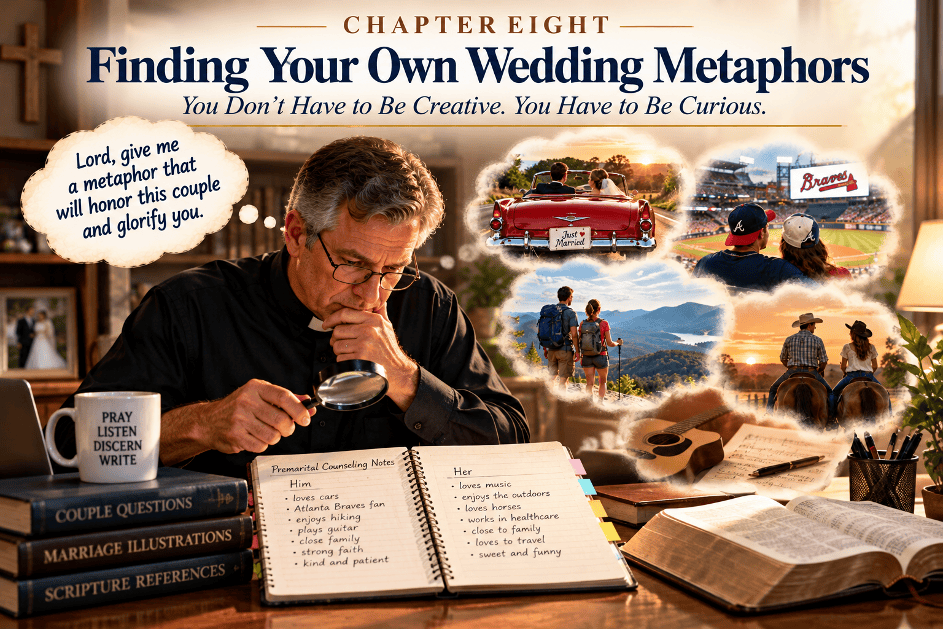
Chapter Eight
Finding Your Own Wedding Metaphors
You Don’t Have to Be Creative. You Have to Be Curious.
Over the years, I’ve discovered that one of the most enjoyable parts of preparing a wedding ceremony is finding an illustration that fits the couple.
Now, I need to make a confession.
I don’t begin by sitting down with three biblical principles about marriage and then searching for an illustration to support them.
I actually work the other way around.
I begin by looking for the metaphor.
What does this couple enjoy doing together?
What interests do they share?
How did they meet?
What makes their relationship unique?
Sometimes the answer practically jumps off the page.
Other times, I have to work a little harder.
But once I discover a possible metaphor, I begin thinking about the spiritual truths it might communicate.
Take the automobile illustration I used for my daughter Sarah and her husband Brian.
Cars had played an important role in bringing them together. Brian loved restoring classic automobiles, and he had helped Sarah learn to drive.
That gave me the metaphor.
Then I began asking myself what cars could teach us about marriage.
They require regular maintenance.
They come with an owner’s manual.
And many have a GPS to help us find our destination.
Suddenly, I had three important truths about marriage.
Take care of your relationship.
Allow God’s Word to guide you.
And trust the Holy Spirit to lead you.
That’s generally how I develop my wedding messages.
Find the metaphor first. Then discover the spiritual truths that fit naturally within it.
Of course, there’s an important caution here.
Not every detail of an illustration needs to become a spiritual lesson.
And we shouldn’t stretch an illustration so far that it becomes ridiculous.
If I have to spend five minutes explaining why something relates to marriage, it’s probably not a very good connection!
The best illustrations are usually simple enough that people immediately understand them.
And remember, our purpose isn’t to impress people with our creativity.
Our purpose is to help a husband and wife understand something meaningful about the marriage they’re beginning.
1. Begin With the Couple, Not the Sermon
When a couple comes to me for premarital counseling, I want to learn about their relationship.
Certainly, there are important subjects we need to discuss. Communication, finances, conflict, faith, and the expectations they bring into marriage all deserve attention.
But along the way, I also want to discover who these two people really are.
So I ask questions.
How did you meet?
What do you enjoy doing together?
What attracted you to each other?
What makes you laugh?
What are some of your favorite memories together?
And then I listen.
Sometimes a couple will mention something that seems insignificant to them but immediately catches my attention.
That’s what happened with Lee and Olivia.
I was having trouble finding an illustration that fit their relationship. They didn’t have an unusual hobby or a dramatic story about how they met.
But somewhere in our conversations, they mentioned enjoying walks and hikes together.
That was enough.
I began thinking about marriage as a journey, with beautiful scenery, unexpected turns, steep climbs, and the importance of walking together.
It wasn’t necessary for them to be expert hikers.
It was simply something they enjoyed.
And that gave me a starting point.
You don’t have to discover something extraordinary about a couple. You simply have to discover something that’s genuinely theirs.
2. Look for the Connections
Once I’ve identified a possible metaphor, I begin asking what that activity or interest can teach us about marriage.
Sometimes I write down several possibilities before deciding which ones to use.
When I prepared the baseball message for Connor and Brooke, the connections came rather naturally.
Connor had been a pitcher.
Brooke had been a catcher.
They loved the Atlanta Braves.
And baseball is a team sport.
That gave me an opportunity to talk about communication, teamwork, the support of family and friends, and allowing God to direct their marriage.
But suppose you’re preparing a wedding for a couple who enjoys gardening.
You might begin thinking about what gardening requires.
Plants need attention.
Weeds have to be removed.
Growth takes time.
And healthy plants need nourishment.
Now consider how those principles might apply to marriage.
A husband and wife need to give their relationship regular attention.
They need to deal with resentment before it takes root.
They need patience as their relationship grows.
And they need the spiritual nourishment that comes from walking with God.
There’s the beginning of a wedding message!
You don’t need to use every possible connection.
In fact, I would encourage you not to.
Choose the two or three that communicate the most important truths.
A wedding message isn’t supposed to be a thirty-minute sermon.
People have come to witness a marriage, not attend a preaching conference!
3. Don’t Force the Illustration
This may be one of the most important lessons I’ve learned.
Just because you find an interesting metaphor doesn’t mean every part of it has to represent something spiritual.
Sometimes pastors can become so fascinated with an illustration that they try to make every detail mean something.
Before long, the illustration becomes more complicated than the truth we’re trying to communicate.
And the people listening are wondering where in the world we’re going!
Keep it simple.
If the couple loves fishing, talk about patience, understanding each other, and learning when to respond.
If they enjoy hiking, talk about walking together through life’s changing seasons.
If they love restoring automobiles, talk about maintenance and guidance.
And if a connection seems forced, leave it out.
Remember, the metaphor serves the message.
The message doesn’t serve the metaphor.
4. Don’t Be Afraid to Ask for Help
When I prepared the wedding message for Corey and Sydney, I knew that horses were important to their lives.
Sydney loved horses, and Corey loved Sydney.
That seemed like a pretty good place to begin!
But there was one problem.
I didn’t know much about training horses.
I could have avoided the subject altogether.
But I believed it would be meaningful to Sydney and her family.
So I asked questions.
I talked with people who knew more about horses than I did.
And when I had prepared the message, I gave Sydney an opportunity to review it.
I wanted to make sure I wasn’t saying something foolish about a subject she understood far better than I did.
That’s something I would encourage every pastor to do.
If you’re developing an illustration about something unfamiliar, ask someone who knows the subject.
And whenever possible, let the couple review the message before the wedding.
You don’t lose credibility by admitting you don’t know everything.
You may actually gain some!
Besides, there’s nothing quite like standing in front of a wedding congregation and discovering that everyone in the room knows your illustration is wrong.
I’d prefer to avoid that experience!
5. Keep the Couple at the Center
There’s another danger when preparing personalized wedding messages.
We can become so excited about our clever illustration that we forget why we’re there.
The wedding isn’t about the pastor.
It’s about the couple making a covenant before God.
Our illustration should help them understand something important about their relationship.
It should also be something they’re comfortable hearing in front of their family and friends.
During premarital counseling, couples sometimes share personal information that doesn’t belong in a public ceremony.
Just because something would make an interesting story doesn’t mean it should be told.
I try to remember that my responsibility is to honor the couple, not embarrass them.
And that’s another reason I like allowing couples to review the ceremony before the wedding day.
I want them to be able to relax and enjoy the service.
They shouldn’t have to worry about what the preacher might say next!
6. Bring the Illustration Back to God’s Word
Now, I don’t want anyone to misunderstand what I’m suggesting.
Finding a creative illustration is not the most important part of preparing a Christian wedding message.
The most important part is communicating God’s truth.
The illustration simply helps people understand and remember that truth.
Once I’ve identified the metaphor and the principles I want to communicate, I consider how those principles connect with Scripture.
For example, if I’m talking about patience, I might think about 1 Corinthians 13 and its reminder that love is patient and kind.
If I’m emphasizing the importance of maintaining a relationship, I might consider the biblical encouragement to love one another, forgive one another, and bear with one another.
If I’m talking about God’s guidance, Proverbs 3:5–6 reminds us to trust in the Lord rather than depending entirely on our own understanding.
And if I’m emphasizing the importance of building a marriage on a strong foundation, Jesus’ teaching about the wise builder in Matthew 7 provides a wonderful connection.
I don’t believe every point needs a separate Bible verse.
But I do believe the spiritual truths we communicate ought to be faithful to Scripture.
We’re not simply offering marriage advice.
We’re helping a couple begin their marriage with an understanding of God’s design for their relationship.
The metaphor helps them remember. God’s Word gives them something worth remembering.
7. Leave Room for God to Surprise You
I also want to encourage pastors to pray about their wedding messages.
That may seem obvious, but I think it’s important.
Sometimes I struggle to find the right illustration.
I listen to the couple, think about their interests, and consider different possibilities.
And sometimes nothing seems to fit.
But there have also been occasions when an idea came together so quickly that I believed God had given it to me.
That’s what happened with the musical wedding message.
Both the bride and groom were musicians, and the idea of marriage as a beautiful love song came together in a way that seemed almost effortless.
I don’t expect that to happen every time.
And I don’t think a pastor should feel spiritually inadequate when preparing a message requires hard work.
But I do believe God cares about the couples we’re counseling and marrying.
And I believe He can guide us as we seek to minister to them.
So pray.
Listen.
Think.
Ask questions.
And remain open to the possibility that God may give you an idea you hadn’t considered.
8. A Simple Worksheet for Your Next Wedding
Let me give you a practical exercise.
The next time you’re preparing a personalized wedding message, take a sheet of paper and answer these questions.
Getting to Know the Couple
- How did they meet?
- What activities or interests do they share?
- What makes their relationship unique?
- What qualities do they admire in each other?
- What stories or experiences might provide a meaningful illustration?
Finding the Metaphor
- What activity, object, or experience could represent their relationship?
- What three or four characteristics of that metaphor relate naturally to marriage?
- Which two or three connections would be most meaningful to this couple?
Finding the Spiritual Truths
- What biblical principles connect with those characteristics?
- What Scripture passages might help communicate those truths?
- What do I hope the couple will remember about this message ten years from now?
Preparing the Ceremony
- Is the illustration accurate?
- Have I avoided anything that might embarrass the couple?
- Have I allowed them to review the ceremony?
- Does the message point them toward a Christ-centered marriage?
You don’t have to use this worksheet exactly as I’ve written it.
But I believe these questions can help you develop a message that is personal, meaningful, and faithful to God’s Word.
One Final Encouragement
Let me finish with something I hope every small-church pastor will remember.
You don’t have to be a gifted storyteller to prepare a meaningful wedding message.
You don’t have to know everything about automobiles, baseball, horses, fishing, or hiking.
And you certainly don’t have to come up with the most original illustration anyone has ever heard.
You just need to care about the people God has placed in front of you.
Listen to their stories.
Learn what makes them laugh.
Discover what they love.
Pay attention to the things that make their relationship unique.
Then ask God to help you communicate His truth in a way they’ll understand and remember.
Sometimes the illustration will come easily.
Sometimes you’ll have to work at it.
And sometimes you’ll finish preparing the message and think, “Well, that’ll do.”
That’s okay, too.
Because the goal isn’t to produce a masterpiece.
The goal is to minister to two people who are beginning one of the most important journeys of their lives.
And if something you say helps them remember to be patient, forgive each other, trust the Lord, or keep loving each other through difficult times, then I believe you’ve done something worthwhile.
You don’t have to be creative. You just have to be curious, prayerful, and willing to listen.
Chapter Nine
Be Calm, Because Everyone Else Is Losing Their Minds!
Practical Advice for the Wedding Day
I’ve performed a lot of weddings over the years.
And I’ve discovered something.
Weddings can make perfectly normal people act a little crazy!
People who are usually calm suddenly become nervous wrecks.
Mothers worry about everything.
Brides worry about things they can’t control.
Grooms are wondering whether they’re going to remember their vows.
And wedding planners are running around trying to make sure everything happens exactly as scheduled.
Sometimes I think being a little crazy must be a prerequisite for becoming a wedding planner!
Now, before I get in trouble with every wedding planner in America, let me say that I’ve worked with some wonderful ones.
But weddings can be stressful.
And when people are stressed, they don’t always act like themselves.
That’s why I believe one of the most important things a minister can bring to a wedding is a calm presence.
Be calm, because everyone else is losing their minds!
1. Be Early. It’s One Less Thing They Have to Worry About.
I try to arrive early for weddings.
Not just on time.
Early.
Why?
Because the bride and groom already have enough things to worry about.
They don’t need to be wondering whether the preacher is going to show up.
When I arrive early, I can let the wedding planner or family know I’m there.
I can make sure I understand where I’m supposed to be.
I can review the order of the ceremony.
And if something unexpected has come up, there’s time to deal with it.
But there’s another reason I enjoy arriving early.
It gives me an opportunity to visit with people.
Sometimes I’ll spend time with the groom and his groomsmen.
Other times I’ll talk with family members or friends who are waiting for the ceremony to begin.
And those conversations can be important.
You never know when you’ll meet someone who needs a little encouragement.
You might meet someone who’s struggling with life.
You might have an opportunity to talk with someone about Jesus.
Or you might meet a couple who will eventually ask you to perform their wedding.
I’ve always believed that ministry happens in relationships.
And a wedding gives us opportunities to build relationships with people we might never meet otherwise.
So don’t rush in at the last minute, perform the ceremony, and hurry out.
Get there early.
Be available.
And see what opportunities God places in front of you.
2. Don’t Be Too Holy to Be Human
I’ve spent time in some interesting groom’s rooms over the years.
Sometimes the men are nervous.
Sometimes they’re laughing and telling stories.
And sometimes they’re taking a few shots of alcohol to settle their nerves.
Now, I don’t join them.
That’s not something I do.
But I also don’t believe my responsibility is to walk into the room and make everyone feel guilty.
I’m there to be their pastor.
Or at least to be a friend who happens to be a pastor.
I want them to feel comfortable around me.
I want them to know that I care about them.
And I want them to understand that being a Christian doesn’t mean you have to look down on people who make different choices than you do.
That doesn’t mean I have to participate in everything they’re doing.
And if someone becomes so intoxicated that I question whether they can meaningfully make their wedding vows, that’s a different matter.
But I don’t need to turn every awkward moment into a sermon.
Sometimes the best thing I can do is sit down, laugh with the guys, and enjoy getting to know them.
I think Jesus understood something about this.
He was comfortable spending time with people who weren’t particularly religious.
And people who weren’t particularly religious often felt comfortable around Him.
I want that to be true of my ministry, too.
You don’t have to compromise your convictions to make people feel welcome in your presence.
3. Let the Wedding Planner Do Their Job
If there’s a wedding planner, let that person do the planning.
I’ve been to enough weddings to know that some wedding planners have very strong opinions about how things ought to happen.
And sometimes those opinions are communicated rather enthusiastically!
But I’ve learned that the best thing I can do is cooperate.
I’m not there to compete with the wedding planner.
I’m there to perform the ceremony and help the couple enjoy their day.
So if the planner tells me where to stand, I stand there.
If they have a particular way they want the wedding party to enter, I try to accommodate it.
If they need me to wait a few minutes before beginning, I wait.
Obviously, I wouldn’t agree to something that violates my convictions or prevents me from fulfilling my responsibility as the minister.
But most of the time, there’s no reason to make an issue out of little things.
Remember, the bride and groom have probably spent months planning this wedding.
They’ve invested a great deal of time and money.
And they don’t need the preacher creating another problem.
Be flexible, not rigid.
4. Sometimes You Become the Wedding Planner
Of course, not every wedding has a professional planner.
And when there isn’t one, guess who sometimes becomes the unofficial wedding coordinator?
The preacher!
After all, you’ve probably attended more weddings than almost anyone else in the room.
You know what normally happens.
You know when people are supposed to stand.
You know when the bride enters.
And you know what comes next.
So sometimes you have to help direct things.
You may need to remind the wedding party where to stand.
You may need to explain when the music should begin.
You may need to tell someone when it’s time for the next part of the ceremony.
And that’s okay.
I don’t mind helping.
In fact, I consider it another opportunity to serve the couple.
But I try to do it calmly.
There’s no need to bark orders or act like a general preparing troops for battle.
A little patience and a friendly attitude can go a long way.
And if something doesn’t happen exactly the way it was planned, that’s usually not the end of the world.
Most people won’t even know something went wrong unless we tell them!
5. Give the Couple Choices
When I begin preparing a wedding ceremony, I give the couple a copy of what I call my plain-Jane wedding ceremony.
It includes the traditional elements of a Christian wedding.
But I also include several optional ceremonies they may want to consider.
For example, there’s a unity candle ceremony.
There’s a sand ceremony.
And there’s an opportunity for the couple to share Communion.
I tell them to look through the ceremony and decide what they would like to include.
I don’t insist that every wedding be exactly the same.
Some couples want something very traditional.
Others want to include a special element that reflects their relationship.
And some prefer to keep things simple.
That’s fine with me.
It’s their wedding.
My responsibility is to help them prepare a meaningful Christian ceremony that reflects their wishes while honoring the Lord.
I want them to have choices.
And I want them to feel comfortable telling me what they would like.
6. I Don’t Do Spontaneous Weddings!
Now, having said all of that about flexibility, there’s one area where I’m not particularly flexible.
I want everything I’m going to say written down.
Everything.
I don’t like surprises during a wedding ceremony.
I don’t want someone walking up to me five minutes before the wedding and saying, “Pastor, we thought it would be nice if you added something about…”
No, thank you!
I’ve learned that there’s enough pressure involved in performing a wedding without trying to remember something I haven’t prepared.
I want the words in front of me.
I want to know exactly what comes next.
And I want to be able to concentrate on the couple rather than worrying about whether I’m going to forget something important.
My written ceremony is my security blanket!
Now, that doesn’t mean I stand there and read every word without looking up.
I still want the ceremony to feel warm and personal.
But knowing that everything is written down gives me confidence.
And that confidence helps me remain calm.
I’ve always believed that good preparation allows us to be more relaxed when the moment arrives.
So I encourage pastors to prepare their ceremonies carefully.
Print them out.
Review them.
Make sure the names are correct.
And don’t feel guilty about having every word in front of you.
The couple doesn’t care whether you’ve memorized the ceremony.
They care whether you help make their wedding meaningful.
7. My Basic Wedding Ceremony
Although I personalize the wedding message, I generally follow the same basic order for the ceremony itself.
Here’s the structure I’ve used over the years.
1. The Processional
The wedding party enters, followed by the bride.
2. The Greeting
I welcome the family and friends who have gathered and remind everyone of the significance of the occasion.
3. The Charge
I speak to the couple about the seriousness and beauty of the marriage covenant.
4. The Commitment
The bride and groom publicly express their intention to enter marriage.
5. The Wedding Message or Metaphor
This is where I share the personalized message we’ve been discussing throughout this section of the book.
6. The Vows
The couple makes their promises to one another.
7. The Exchange of Rings
The rings become a visible reminder of the covenant they’ve made.
8. The Special Ceremony, if Desired
This might include Communion, a unity candle, a sand ceremony, or another meaningful element the couple has chosen.
9. The Prayer of Blessing
I pray for the couple and ask God to guide and strengthen their marriage.
10. The Pronouncement
I pronounce them husband and wife and conclude the ceremony.
That’s the basic structure.
It’s simple.
It’s familiar.
And it works.
Of course, couples sometimes want to make changes.
And I’m happy to work with them.
But having a basic structure gives us a starting point.
It also makes preparing a personalized ceremony much easier.
I don’t have to reinvent the entire wedding every time.
I simply take the basic ceremony and make the appropriate changes for that particular couple.
8. Remember Why You’re There
Let me finish with one more thought.
The wedding day isn’t about you.
It’s not about whether you deliver the greatest wedding message anyone has ever heard.
It’s not about whether the wedding planner appreciates your cooperation.
And it’s certainly not about making sure everyone knows how important the preacher is.
You’re there to serve.
You’re there to help two people begin their marriage.
You’re there to represent Jesus.
And you’re there to be a calming presence during one of the most important and emotional days of their lives.
So arrive early.
Be friendly.
Be flexible.
Be prepared.
And don’t add to the stress.
If something goes wrong, help solve the problem.
If someone is nervous, encourage them.
If the wedding planner seems overwhelmed, cooperate.
And if you have an opportunity to build a relationship with someone who doesn’t know Jesus, take it.
Because sometimes the most important ministry you do at a wedding happens before the bride ever walks down the aisle.
Be calm, because everyone else is losing their minds.
And remember, you’re not just performing a wedding.
You’re pastoring people.
Appendix A
My Basic Wedding Ceremony
A Ready-to-Use Guide for Pastors
Over the years, I’ve developed a basic wedding ceremony that I use as the starting point for almost every wedding I perform.
I call it my plain-Jane wedding ceremony.
There’s nothing particularly fancy about it. It includes the traditional elements of a Christian wedding, along with several optional ceremonies that couples may want to include.
I give the couple a copy and encourage them to read through it.
I tell them to make suggestions, choose the elements they want, and let me know if there’s something they’d like to change.
After all, it’s their wedding, not mine.
But I do have one requirement.
I want everything I’m going to say written down before the wedding day.
I don’t like surprises when I’m standing in front of a bride and groom!
There’s already enough pressure at a wedding, and my written ceremony is my security blanket.
The following is the basic ceremony I’ve used for many years. I’ve replaced the names with BRIDE and GROOM so you can adapt it to the couples you’re marrying.
Feel free to make it your own.
Just remember that the goal isn’t to create the fanciest ceremony anyone has ever witnessed.
It’s to help two people make a meaningful covenant before God.
The Wedding Ceremony
The Marriage of BRIDE and GROOM
Date: ______________________
Location: ______________________
Officiating Minister: ______________________
1. The Processional
The wedding party enters according to the order established during the rehearsal.
The congregation stands for the entrance of the bride, if requested.
2. The Greeting
Dearly beloved:
We are gathered here today in the sight of God and in the presence of these witnesses to join together this man and this woman in holy matrimony.
Marriage is an honorable estate, instituted by God at the beginning of Creation.
Genesis 2:24 states:
“That is why a man leaves his father and mother and is united to his wife, and they become one flesh.”
Our Lord Jesus Christ honored marriage through His presence and His first miracle at a wedding in Cana of Galilee.
The Scriptures also teach us to hold marriage in honor.
It is therefore not to be entered into carelessly, but reverently, thoughtfully, and in the fear of God.
3. The Charge
GROOM and BRIDE, I charge you both, as you stand in the presence of God, to remember that the commitment of marriage is intended to last a lifetime.
It is God’s desire that you remain faithful to one another throughout your lives.
If the vows you exchange today are kept faithfully, and if you seek always to know and do the will of God, your lives will be blessed by His presence, and your home will become a place of peace.
Optional: Presentation of the Bride
If the couple wishes to include this traditional element:
Minister: Who gives this woman to be married to this man?
Response: Her mother and I do.
The response may be adapted to reflect the couple’s family circumstances and preferences.
4. The Commitment
GROOM and BRIDE, marriage is a sacred covenant through which God enables couples to grow in love, compassion, and forgiveness.
Your lives will be enriched as you learn to care for one another.
You have the opportunity to encourage each other’s dreams and help one another become everything God desires you to be.
You also have the opportunity to demonstrate to the world the beauty of unconditional love.
But all of this is possible only as you allow God to remain at the center of your relationship.
Psalm 127:1 reminds us:
“Unless the LORD builds the house, the builders labor in vain.”
God desires to make your home a place of acceptance, security, and grace.
My prayer is that His presence will guide you throughout your lives.
Declaration of Intent
Minister to GROOM:
GROOM, will you have this woman to be your wife, to live together according to God’s ordinance in the holy estate of matrimony?
Will you love her, comfort her, honor and keep her, in sickness and in health; and, forsaking all others, remain faithful to her as long as you both shall live?
If so, answer, “I do.”
GROOM: I do.
Minister to BRIDE:
BRIDE, will you have this man to be your husband, to live together according to God’s ordinance in the holy estate of matrimony?
Will you love him, comfort him, honor and keep him, in sickness and in health; and, forsaking all others, remain faithful to him as long as you both shall live?
If so, answer, “I do.”
BRIDE: I do.
5. The Personalized Wedding Message
Insert the personalized wedding metaphor here.
This is where I share the message I’ve prepared specifically for the couple.
It might be based on automobiles, fishing, hiking, baseball, music, or another interest that is meaningful to them.
The message should be personal, reasonably brief, and grounded in biblical truth.
I generally focus on two or three principles that I hope the couple will remember throughout their marriage.
6. The Marriage Vows
Minister:
GROOM, please repeat after me.
I, GROOM, take you, BRIDE,
To be my wife,
To have and to hold,
From this day forward,
For better and for worse,
For richer and for poorer,
In sickness and in health,
To love and to cherish,
Till death do us part.
Minister:
BRIDE, please repeat after me.
I, BRIDE, take you, GROOM,
To be my husband,
To have and to hold,
From this day forward,
For better and for worse,
For richer and for poorer,
In sickness and in health,
To love and to cherish,
Till death do us part.
7. The Exchange of Rings
Minister:
Do you have a token of your love for each other?
The rings are presented.
Wedding rings are lasting symbols of the vows and commitments made on this wonderful occasion.
These rings will remain a reminder of the promises you have made.
A ring is an unbroken circle. It has no beginning and no end.
Traditionally, wedding rings have been made of precious metals chosen for their beauty and durability.
Our prayer is that these rings will symbolize your love for each other.
May your love endure throughout your lives.
Let us pray.
Prayer of Blessing for the Rings
Heavenly Father, we ask Your blessing upon these rings.
May these unbroken circles remind GROOM and BRIDE each day of Your never-ending love and of the covenant they have made with one another.
In Jesus’ name we pray. Amen.
The Ring Vows
Minister to GROOM:
Please repeat after me.
This ring I give you,
As a token of my love,
And as a pledge
Of my constant faith.
GROOM places the ring on BRIDE’s finger.
Minister to BRIDE:
Please repeat after me.
This ring I give you,
As a token of my love,
And as a pledge
Of my constant faith.
BRIDE places the ring on GROOM’s finger.
8. Optional Special Ceremony
At this point, the couple may include Communion, a unity candle, a sand ceremony, a marriage braid, or a binding-of-hands ceremony.
The wording for these options is provided later in this appendix.
If no special ceremony is selected, proceed directly to the Prayer of Blessing.
9. The Prayer of Blessing
Almighty God, we are so very grateful to You for bringing GROOM and BRIDE together.
We believe their meeting was no accident, and we thank You for Your presence in this service.
We ask now, Heavenly Father, that You would bless their marriage.
We acknowledge that for them to have a loving and successful marriage, they are going to need Your help.
Please surround them with Your love and enable them to care for each other in amazing ways.
May Your Spirit abide in their hearts.
May their home be a place of truth, security, and love.
May their lives be an example of concern and service to others.
And may those of us who have witnessed these vows find our own relationships strengthened and our loyalties confirmed.
In Jesus’ name we pray.
Amen.
10. The Declaration of Marriage
Forasmuch as GROOM and BRIDE have made this solemn covenant of marriage before God and before all of us gathered here, and have pledged their vows to each other, confirming them by the joining of hands and the giving and receiving of rings, I now, in the name of the Father, and of the Son, and of the Holy Spirit, declare you to be husband and wife.
You may kiss the bride.
It is my privilege to present to you:
Mr. and Mrs. ____________________
Use the couple’s preferred form of introduction.
11. The Recessional
The newly married couple exits, followed by the wedding party according to the agreed-upon order.
Optional Wedding Ceremonies
The following are ceremonies I’ve included over the years to give couples additional choices.
I don’t expect every couple to use one of these.
Some prefer a simple ceremony without any additional elements.
Others appreciate the opportunity to include something symbolic.
My responsibility is to help them select something meaningful and make sure everyone understands what will happen.
Option One: Communion
Minister:
Jesus gave His life on a cross so that our sins might be forgiven and we might have abundant life.
It is appropriate that GROOM and BRIDE would want to receive Communion as part of this sacred wedding ceremony.
As they receive the bread and the cup, they remember the sacrifice of our Lord Jesus Christ and invite His Spirit to guide their marriage.
They desire for God to be central in everything they do.
Let us pray.
Prayer:
Heavenly Father, we thank You for Jesus and His invitation to remember His sacrifice through the bread and the cup.
As GROOM and BRIDE receive this sacrament, may Your Holy Spirit be present with them and strengthen their union.
May their marriage always be centered on Your love and grace.
In Jesus’ name we pray.
Amen.
The couple receives Communion according to the practice of the officiating minister’s church or denomination.
Option Two: The Marriage Braid
Minister:
The Bible states in Ecclesiastes 4:12:
“Though one may be overpowered, two can defend themselves. A cord of three strands is not quickly broken.”
Today, GROOM and BRIDE have chosen to braid three strands together into a single cord.
Each strand has a special meaning.
The middle strand represents God and His presence in their marriage.
One outside strand represents GROOM and his life.
The other outside strand represents BRIDE and her life.
As these three strands are braided together, they symbolize the union of GROOM and BRIDE with God at the center of their relationship.
God is the One who teaches us how to love.
And as they keep Him at the center of their marriage, His love will continue to strengthen and unite them.
The couple braids the three strands together.
Option Three: The Binding of Hands Ceremony
Minister:
The binding of hands is a traditional ceremony in which the hands of the bride and groom are joined with cords, symbolizing the union taking place in their hearts.
Jesus reminds us that what God has joined together, no one should separate.
GROOM and BRIDE, I ask you to look into each other’s eyes.
Minister:
Will you honor and respect one another and seek never to break that honor?
Couple: We will.
The first cord is draped over their joined hands.
And so the first binding is made.
Minister:
Will you share each other’s pain and seek to ease it?
Couple: We will.
The second cord is draped over their hands.
And so the second binding is made.
Minister:
Will you share one another’s burdens so that your spirits may grow together in this union?
Couple: We will.
The third cord is draped over their hands.
And so the third binding is made.
Minister:
Will you share each other’s laughter, look for the brightness in life, and seek the good in one another?
Couple: We will.
The fourth cord is draped over their hands.
And so the fourth binding is made.
The cords are gently tied together.
GROOM and BRIDE, as your hands are bound together now, so your lives are joined in a union of love and trust.
Above you are the stars, and below you is the earth.
May your love be a constant source of light, and may your faith provide a firm foundation upon which your marriage will grow.
The cords are removed before the ceremony continues.
Option Four: The Sand Ceremony
Minister:
GROOM and BRIDE, today you join your separate lives together in marriage.
These two containers of sand represent your individual lives.
They represent your families, your friendships, your experiences, and everything that has brought you to this moment.
Each container is unique, just as each of you is unique.
As you pour the sand into this third container, the grains become joined together.
The two colors are still visible, but they now form one beautiful creation.
In the same way, marriage brings two individual lives together in a new and lasting covenant.
You will continue to have your own personalities, gifts, and interests.
But from this day forward, you will also share a life together.
May this container remind you of the promises you have made today and of the beautiful relationship you are building with God’s help.
The couple pours the sand into the shared container.
Option Five: The Unity Candle
Minister:
At this time, GROOM and BRIDE will light the unity candle.
The two outside candles represent the faith, wisdom, and love they have received from their families throughout their lives.
Today, they bring those gifts into a new marriage.
As they light the center candle together, they symbolize the joining of their lives into one.
From this day forward, they will share their joys and sorrows, their hopes and dreams, and the responsibilities of building a home together.
May the light of this candle remind them of the love they have pledged to one another.
And may the light of Christ continue to shine in their home throughout their lives.
The couple lights the center candle together.
Quick Reference: The Order of Service
- Processional
- Greeting
- Charge
- Optional Presentation of the Bride
- Commitment and Declaration of Intent
- Personalized Wedding Message
- Marriage Vows
- Exchange of Rings
- Optional Special Ceremony
- Prayer of Blessing
- Declaration of Marriage and Introduction
- Recessional
A Final Word to Pastors
There you have it.
My plain-Jane wedding ceremony!
It’s served me well for many years, and I hope it will be helpful to you.
Use it as a starting point.
Make whatever adjustments are necessary for the couple you’re marrying, your denominational requirements, and the marriage laws where you’re officiating.
Give the couple a chance to review it.
Make sure the wedding planner knows the order.
And most importantly, have everything prepared before the wedding day.
When the bride starts walking down the aisle, you don’t want to be wondering what you’re supposed to say next!
Remember, the purpose of the ceremony isn’t to impress people with your eloquence.
It’s to help two people make a sacred covenant before God.
If you can do that with warmth, reverence, and a little personal encouragement, you’ve done something worthwhile.
And if you can remain calm while everyone else is losing their minds, that’s even better!
You’re not just performing a wedding. You’re pastoring people.

