Participatory Preaching
Introduction: More Than a Conversation
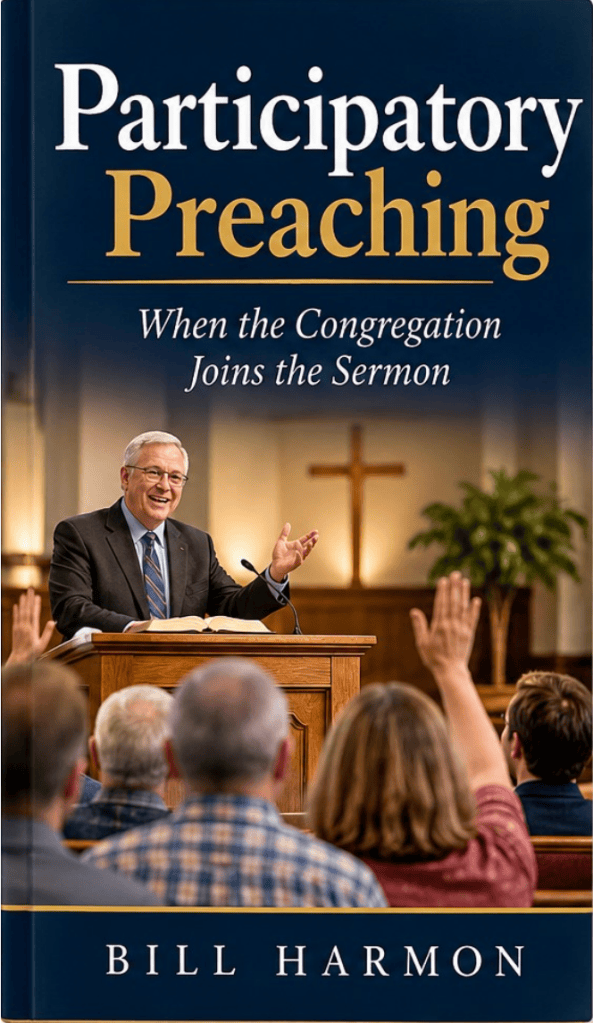
I love to preach. I also love it when the people in the pews help me preach. Not every Sunday, of course. Some Sundays call for a more traditional sermon. But occasionally, as I pray and study, I sense that the Lord is leading me to ask the congregation a few questions and invite them into the message.
That is what I mean by participatory preaching. I am not asking people to replace the preacher or decide what the Bible means by popular vote. I am inviting them to think about Scripture, talk about it with the peoplcane around them, and sometimes share an answer with the whole congregation.
I pastor a local church, not a laboratory. I cannot prove that our people remember a certain percentage more when they discuss a sermon. But I have seen children become involved, neighbors reach out to people sitting alone, and thoughtful answers help an entire congregation see a passage more clearly.
This is not a method for every pastor on every Sunday. It is one more tool that God may use. My hope is to explain how it came into my ministry, how I prepare for it, and what I have learned when the answers are wonderful, unexpected, or
nonexistent.
Chapter 1: Coffee, Doughnuts, and a Sermon

How I Discovered Participatory Preaching
I have always believed that preaching should be more than delivering information. The goal isn’t simply to get through a sermon. The goal is for people to hear God’s Word, understand it, remember it, and hopefully do something with it.
Over the years, I have tried different ways to make that happen. One of my favorites has been participatory preaching. Instead of having the congregation sit quietly while I do all the talking, I occasionally invite them into the sermon by asking questions and allowing them to respond.
I didn’t invent participatory preaching. In fact, I was introduced to it by someone else. But looking back, I realize that God had planted the seed long before I knew what to call it. And, believe it or not, it all began with coffee, doughnuts, and a class I didn’t particularly want to take.
A Seminary Class I Didn’t Want to Take
When I was attending seminary in Kansas City, I was required to take a course on Christian Education in the Local Church. I wasn’t particularly excited about it. I loved studying the Bible and theology. But seminary required practical ministry courses, so there I was, learning about educational methods.
One of the subjects we studied involved different approaches to learning, including pedagogy and andragogy. We discussed the importance of engaging learners rather than simply expecting them to sit and listen. Our class was divided into groups, and each group was responsible for presenting a particular approach to learning. Two members of our group would explain the. background and theory. My friend Kevin Angel and I were responsible for showing how discussion worked in practice.
We spent a long evening trying to decide what to do. Finally, we decided to wing it. We would arrange the chairs in a circle, provide coffee and doughnuts, and simply. lead a discussion about the different approaches to learning. That was our grand educational strategy.
To our surprise, it worked beautifully. Our classmates became engaged in the conversation. People offered opinions, asked questions, and responded to one another. The hour seemed to fly by. And we got an A! That probably didn’t help my attitude toward practical ministry classes. Here I was. spending hours studying theology, and apparently all I needed to do to get an A in Christian Education was bring coffee and doughnuts!
But something happened that day that stayed with me. I discovered that people often learn better when they are involved in the conversation. I didn’t immediately connect that lesson to preaching. But the seed had been planted.
A Conference in Nashville
Years later, I attended PALCON, a gathering of Nazarene pastors held periodically at our denominational universities. At one conference in Nashville, I noticed a breakout session on something called participatory preaching.
I’ve always enjoyed looking for creative ways to communicate the gospel, so the subject caught my attention. Apparently, it didn’t catch the attention of very many other pastors. There weren’t many of us in the room. But I was fascinated.
The woman leading the seminar explained the basic premise of participatory preaching and why inviting the congregation into the conversation could make preaching more effective. I loved the idea. I came home determined to try it.
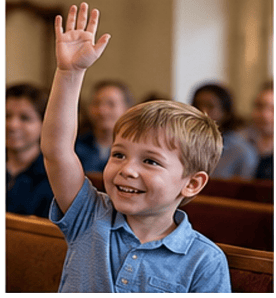
At first, I simply began asking an occasional question during my sermons. I discovered that people were willing to respond, especially the children and teenagers. At our church, the first Sunday of each month is Family Worship Sunday. Instead of leaving for children’s church, the children remain in the sanctuary for the entire worship service. Those Sundays became natural opportunities to experiment with participatory preaching.
And something wonderful happened. The children began looking forward to it. Instead of simply enduring the sermon until the service ended, they had an opportunity to become part of it. And I enjoyed it just as much as they did.
When Participation Gets Complicated
Several years later, our district superintendent invited the same woman who had introduced me to participatory preaching to speak at another gathering. I was excited. to hear her again. By that time, I had discovered some of the blessings and some of the. challenges of this approach.
One challenge is that when you ask a question, you don’t always know what answer you’re going to get. Sometimes people give wonderful answers. Sometimes they give funny answers. And occasionally someone gives an answer that takes the
conversation somewhere you really don’t want it to go.
During the question-and-answer portion of her presentation, I asked, “What do you do when you ask a question and someone starts talking about Trump?” I wasn’t trying to make a political statement. Our church is a political-free zone, and I don’t want our worship services becoming political debates.
I hoped she would explain how to graciously redirect someone who had taken the conversation in an unhelpful direction. My own response would have been something like, “I appreciate your answer, but as you know, our church is a political-free zone, so we’re not going there.” Unfortunately, my question didn’t go over very well. The mention of Trump seemed to
frustrate her, and her response was rather dismissive.
Afterward, I approached her and explained how much I appreciated her teaching, not only that day but years earlier in Nashville. I assured her that I wasn’t trying to have a “gotcha” moment. I’m not sure she believed me.
But the experience reinforced something important: participatory preaching requires more than the ability to ask good questions. It also requires the wisdom to handle unexpected answers. When you invite people into the sermon, you can’t control everything they might say. And that’s okay. You can still guide the conversation with kindness, humor, and grace.
More Than a Preaching Technique
In seminary, I learned that discussion could be a powerful way to teach. At PALCON, I discovered that discussion could also become a powerful way to preach. Over the years, I have watched it help turn passive listeners into active learners.
Not every sermon needs to be participatory. Sometimes the best thing a preacher can do is simply proclaim the Word of God. But sometimes, instead of telling people what they ought to think, we can ask a question that helps them discover biblical truth for themselves. And when that happens, they may remember the lesson long after they’ve forgotten
the sermon.
Who would have thought that a cup of coffee, a doughnut, and an unwanted seminary class could have such a lasting influence on my preaching?
Chapter 2: You Have Permission to Talk in Church!
One of the advantages I had when I began participatory preaching was that my congregation was already accustomed to a pastor who occasionally preached outside the box. Throughout my ministry, I have enjoyed preaching first-person sermons, where I take on the character of someone from the Bible and tell the story from that person’s perspective. Some people love those sermons. Others would prefer that I just preach a traditional sermon.
The same is true of participatory preaching. Most of our congregation seems to enjoy it. But there are others who would be perfectly happy if I would just give them three points and a poem and let them go home. And that’s okay. I simply ask them to give me a little grace.
Not everyone has to participate. There are still adults who rarely offer an answer during the sermon. That doesn’t bother me. They are welcome to listen, reflect, and learn from what others have to say.
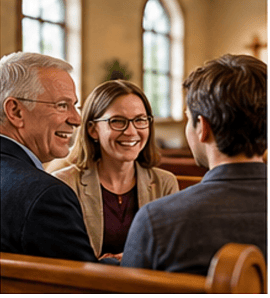
But I do remind everyone that, at least on these Sundays, they have permission to talk to their neighbor during church! When I introduce a participatory sermon, I usually tell the congregation that I have three questions for them, and when we’ve finished discussing those questions, we’ll be done with the sermon. That gives everyone a sense of direction. They know what to expect.
Interestingly, after years of doing this, my biggest challenge isn’t getting people to talk. It’s getting them to stop! Once a good discussion gets going, there may be more people. wanting to respond than we have time to hear. That’s a wonderful problem to have, but it’s still a problem.
Let Them Talk to Each Other First
Most of the time, I give people about a minute to discuss a question with those sitting around them before I invite answers from the whole congregation. Without that step, people can check out, confident that someone else will respond. A brief conversation gives everybody a chance to think.
When a question is easy and likely to produce quick answers, I may skip the neighbor discussion. But if I am asking people to wrestle with something, I want them to have time to think together. Often the conversation in the pew is just as important as the answer shared aloud.
An Invitation, Not an Obligation
At first, people sitting alone often remained alone. Over time, our people became more comfortable seeking out someone to include. Sometimes a person turns around and invites another person into the conversation. That is a small act of fellowship as well as a preaching practice.
Some people, however, would rather be left alone. We need to respect that. Participation should be an opportunity, not a test of spirituality. Since I do not preach this way every Sunday, even our biggest introverts usually give me grace.
After all, the purpose of participatory preaching isn’t to see how many people can answer a question. The purpose is to help the congregation engage with God’s Word. Sometimes that means giving them a chance to speak. Sometimes it means giving them permission simply to listen.
Chapter 3: We Still Have to Live in the Text

Participatory preaching does not eliminate the work of exegesis. It requires the same careful study as any expository sermon. We have to live in the text. We have to know the text. We need to understand the passage in its context before we ask the congregation to help us explore it.
Most of the time I prepare nearly the entire sermon before developing the questions. I know the biblical direction and the truths I hope to communicate. Then I look for places where questions will help people engage. Occasionally the question comes during my study. In Romans 13:14, for instance, Paul says to clothe ourselves with the Lord Jesus Christ. Naturally I asked myself, “What does that mean?” It became a question for the congregation, too.
An insightful response may enrich a point, but it rarely changes the direction of the sermon. That is not because I do not value the answer. It is because the text, not the discussion, establishes the direction. The congregation helps us discover and apply biblical truth; it does not replace biblical interpretation.
A prepared preacher can be flexible
I always prepare several possible answers to my own questions. If nobody responds, I can acknowledge that the question is difficult, offer an answer, and keep moving. I do not walk into the sanctuary with three questions and hope the congregation will prepare my sermon for me.
Chapter 4: Have You Been Reading My Notes?
I like to begin with a question that is easy, personal, and engaging. As we work through the passage, the questions usually become more challenging. Sometimes the opening question is meant to get people thinking in a direction that will matter later.
In Philippians 3, while preaching about knowing Christ better, I asked, “Who is the most famous person you know personally?” I expected answers about celebrities or other well-known people. One of our ten-year-old girls said, “Jesus.” She had already reached the truth I wanted to bring out later: Jesus is the most famous person we can know, and He knows us. I like to say He even has our names in His phone!
When somebody gives an answer that is right where I am heading, I sometimes say, “Have you been reading my notes?” Or I might tell the congregation, “Man, you all aredoing some great preaching today.” That affirms the person and reminds the rest of us that there is wisdom in the pews.
Leave room for laughter
In Philippians 4, I asked what the disagreement between Euodia and Syntyche might have been about. One of our widows answered, “It probably was about a man.” We all laughed. We do not know the reason for their disagreement, but that unexpected moment helped us engage a passage about Christian relationships. People can laugh while they learn.
Three kinds of questions
Some questions invite quick responses. Others deserve a minute of discussion with neighbors. Still others are worth asking even when no one answers aloud. I do not use a rigid formula, but I do want every question to have a purpose and to serve the message.
One More Lesson from the Questions
In our Paul’s Greatest Hits series, the congregation sometimes arrived at the point before I did. In a sermon on humility, I asked what the worst character flaw might be. One person identified arrogance—the very issue Paul’s words would lead us to consider. I had prepared a sermon, but the congregation helped open the door.
Chapter 5: Wait for the Breath!
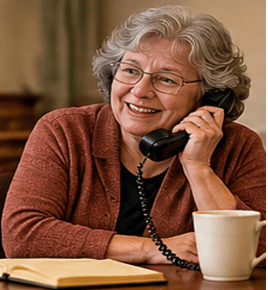
One of the most important skills a participatory preacher can develop is knowing when to end a conversation. I call it waiting for the breath. Every church has someone who loves to talk. You know the person. Whether you’re visiting with them in person or talking on the telephone, they can keep a conversation going long after you’ve run out of things to say.
Over the years, I’ve developed a technique for ending those conversations. I wait for the breath. Actually, that’s not quite accurate. The secret isn’t simply waiting for the person to take a breath. It’s anticipating when they’re about to take one.
You have to be ready. There’s a tiny opening, perhaps only a millisecond, when the person pauses to breathe. If you recognize that moment and move quickly enough, you can graciously bring the conversation to a close.
My associate pastor, Regina, sometimes marvels at how I can get off the telephone with certain church members while she seems to be stuck talking with them for. hours. I’ve tried to explain my secret. “Regina, you have to wait for the breath!”
Of course, the same principle applies to participatory preaching. Occasionally, someone begins answering a question and seems to have no intention of stopping. Most people are considerate, but there are times when you need to help someone
bring their answer to a conclusion.
Because I’ve pastored the same congregation for many years, people generally give me grace when I interrupt them. Sometimes I’ll simply say, “That’s a good answer,” or “I see what you’re saying.” More often, I try to summarize what the person has said. That allows me to acknowledge their contribution while bringing the conversation back to the point of
the sermon.
I’ve also learned that it helps to establish some boundaries before asking a question. For example, I might say, “We’re going to take the five best answers.” Of course, five. answers usually turn into ten. Apparently, counting isn’t one of my spiritual gifts.
But the point is that participatory preaching needs direction. The preacher is still responsible for guiding the sermon, managing the time, and making sure the discussion serves the biblical message.
The congregation has permission to talk, but the pastor still has the responsibility to lead. And sometimes, effective leadership begins with recognizing when someone is about to take a breath.
When a Question Is a Stinker
Occasionally, a question simply bombs. It is often the third one, although certainly not every time or even most of the time. If people go quiet, I may say, “That’s a hard question.” Then I can supply one of the answers I prepared and move the sermon toward its conclusion.
In Philippians 1:21–30, I asked, “What does it mean to suffer for Jesus?” That was a hard question for many of us in America, where our experience of persecution is often limited. It did not generate a lively discussion, but it still moved the message toward its conclusion.
Sometimes a question is meant to be considered rather than answered. Silence does not automatically mean failure. The question may be doing its work quietly.
Chapter 6: Out of the Mouths of Babes
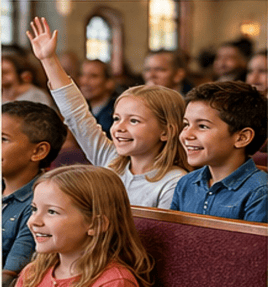
One of my favorite parts of participatory preaching is seeing children engage the Scripture. Parents sometimes remember what their children say more vividly than anything I say. They are amazed by the thoughtfulness of their answers, and they appreciate not having to spend the entire sermon trying to entertain them.
I have heard the familiar claim that people retain only a small percentage of what they hear and far more of what they discuss or practice. The exact percentages often attached to the so-called Learning Pyramid are not well supported, so I would not build an argument on them. There is credible research supporting active learning in educational settings, though it would be a mistake to claim that those studies measure sermon retention directly.
I have not measured what our congregation remembers. I also do not often hear people repeating another person’s answer later in the week. But I see them engage the text, listen to one another, and sometimes surprise their parents. That is valuable in itself. I want people to remember God’s Word and live it, not merely remember my illustrations.
Chapter 7: The Ten Minutes You Cannot Get Back

Participatory sermons require time. Three rounds of discussion and congregational responses can consume eight to ten minutes. Those are minutes I cannot also use for preaching. People are accustomed to worship ending at a certain time, and I try to honor that. So I usually shorten the preaching portions.
That raises a spiritual concern for me. I believe sermons can be too short. We need to give people time to sit under the Word and allow the Holy Spirit to convict and encourage them. I sometimes joke that the secret sauce of old-time evangelists was not only their preaching ability; they simply kept talking long enough for the Spirit to break through to somebody. I am only half joking.
But there is another side. The Holy Spirit is not limited to working while the preacher talks. He can work through a conversation between spouses, an unexpected answer from a child, or a neighbor’s honest reflection. Those ten minutes of participation may accomplish something that ten more minutes of my talking could not accomplish.
This is one reason I do not force participatory sermons. They arise out of prayer and study, much as my first-person sermons do. Until the recent Paul’s Greatest Hits series, I do not believe I had preached more than two participatory sermons in a row. I use the approach when I sense the Spirit leading me to do so, not because I have committed myself to a particular technique.
Chapter 8: The Last Word Belongs to the Holy Spirit
I always want people to have an opportunity to respond to God. The altar is alwaysopen at West Columbia First Church of the Nazarene. I want people to connect with Jesus more than I want them to connect with my message.
My brother is a better preacher than me and one of the most well-read people I know. He does not usually give altar calls, in part because so few people come forward. We have discussed that difference more than once. I believe that even when no one responds publicly, it matters to offer an opportunity to come and pray. I also know that people can respond to God without leaving their seats.
A lively discussion is not the same thing as spiritual transformation. I love a good answer and a good laugh, but I do not want people leaving only saying, “That was fun.” I want them asking what God is saying and how they will respond.
The preacher prepares. The congregation participates. But the last word belongs to the Holy Spirit.
Give It a Try!
You do not have to become a different preacher to try participatory preaching. You do not have to be particularly outgoing, and you certainly do not have to have all the answers. You simply need to prepare God’s Word faithfully, ask a question worth considering, and give your people an opportunity to participate.
Perhaps the next time you prepare a sermon, you could begin with just one question.
Study the passage as you normally would. Find a question that helps people think about what the Scripture means or how it applies to their lives. Prepare your own response in case nobody speaks. Then invite the congregation to talk with a neighbor, or to share an answer if they wish.
You might be surprised by what they have to say. I know I have been. And who. knows? You might discover that some of the best preaching on Sunday morning. comes from someone sitting in the pew.
Above all, remember why we preach. Our goal is not to have the liveliest discussion in
town. Our goal is for people to hear God’s Word and respond to the Lord who speaks
through it. The preacher prepares. The congregation participates. But the last word
belongs to the Holy Spirit.
A Companion for Your Next Sermon
If you would like to see how these principles work in an actual worship service, my companion book, Paul’s Greatest Hits: Five Participatory Sermons and the Stories Behind the Questions, includes five sermons, their discussion questions, selected slides, and reflections on the responses we heard. My hope is that the examples will encourage you to discover what participatory preaching might look like in your own congregation

